






By Francis Kobena Tandoh
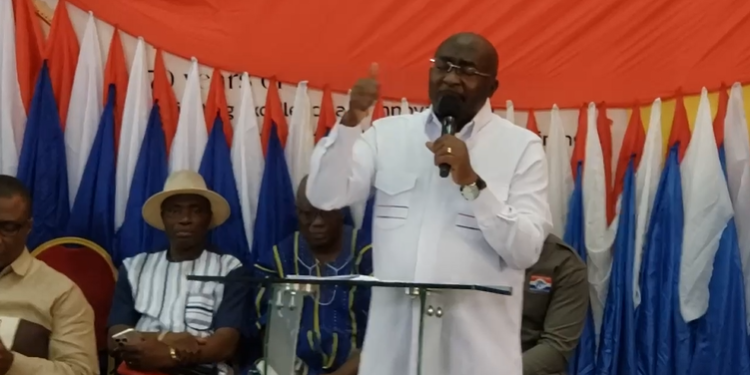
In a new survey by Global InfoAnalytics, former Vice President Mahamudu Bawumia is widening his lead in the internal contest to lead the New Patriotic Party (NPP) into the 2028 general elections.
According to the poll, Bawumia’s “favorability” among NPP delegates reportedly rose to 92%, up 1 percentage point from the previous round.
Under the “likely voters” model, he leads with about 42.7% support overall, while under the “committed voters” model—i.e., those who explicitly name whom they will vote for—he leads with approximately 63.3%.
Geographically, Bawumia leads across most regions: the poll gives him majority support in 14 out of Ghana’s 16 regions among NPP delegates.
A substantial share of delegates remain undecided or declined to reveal their preference. In the “likely voters” bracket, about 14.9% did not disclose their intention, and roughly 19.3% were still undecided.
That means the final outcome could still shift, especially if a good portion of the undecided voters swing toward another candidate.
Polling models (likely vs committed voters) show different levels of support— “committed voters” tend to exaggerate support because they exclude undecided voters.
The strength of Bawumia’s lead suggests that within the NPP, he remains the frontrunner for flagbearer. His broad regional support and high favorability among committed delegates give him a stable foundation.
However, the undecided block (nearly one-third of delegates, if you combine undecided and non-disclosing) remains a wildcard. If another candidate can sway even a fraction of them, it could narrow the gap or cause surprises.
Strategically, Bawumia’s biggest advantage seems to be among the core/voter base that is somewhat “locked in.” Thus, challengers may need to focus on mobilising the undecided delegates.
The NPP will hold a presidential primary on January 31, 2026, to elect a candidate to lead the party into the 2028 general election. Enditem
Source: Ghana Eye Report