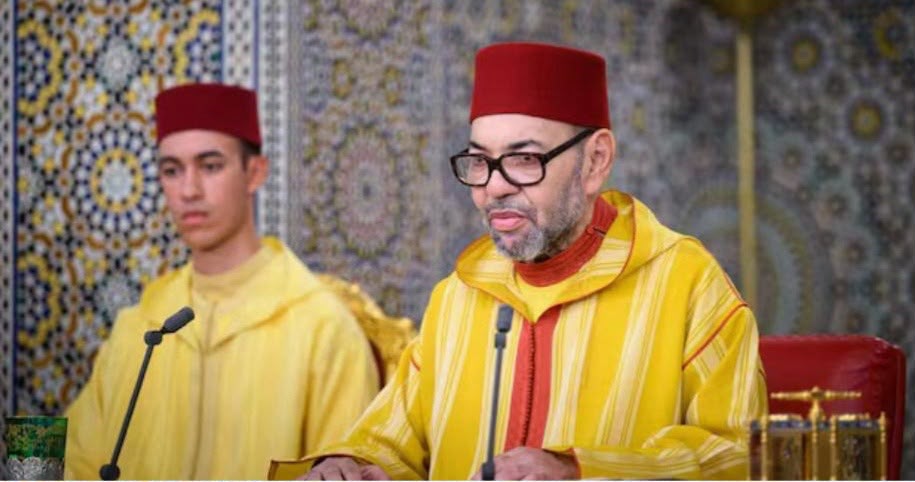
King Mohammed VI on Wednesday delivered a resolutely optimistic assessment of Morocco’s progress, highlighting the country’s stability, economic growth and strengthened industrial sovereignty.
In a speech delivered on the occasion of the 27th anniversary of his accession to the Throne, the Sovereign said that the Kingdom had reached a decisive stage in its development. He called for preserving confidence in the future and continuing the reforms undertaken in recent years.
The King presented the results achieved as the outcome of a strategic vision based on initiative, rigorous monitoring, self-criticism and continuity in public action.
He also stated that his priority had always been to serve Moroccans and enable them to live in dignity as free citizens, rejecting any pursuit of personal prestige or international recognition.
His Majesty the King placed particular emphasis on Morocco’s security and political stability.
In a regional and international environment marked by crises and tensions, he said that institutional stability constituted a rare advantage and a strategic asset for the Kingdom.
According to the Sovereign, this stability enables the country to continue implementing its projects, maintain the proper functioning of its institutions and address difficulties.
In this regard, he cited Morocco’s ability to host continental and international events, as well as its resilience in managing disasters and crises.
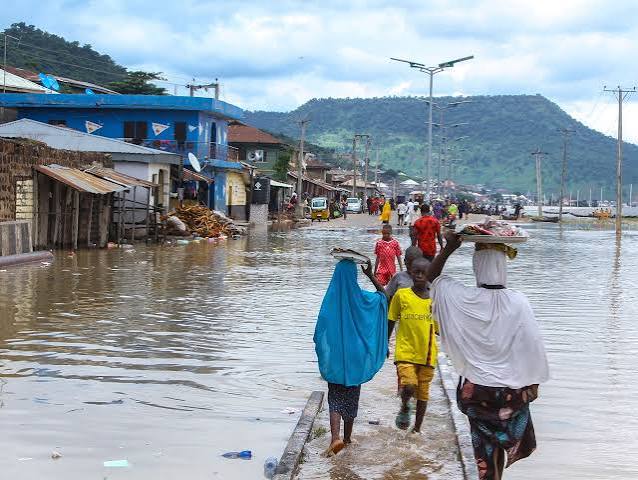
The King referred in particular to the proactive management of the floods that affected the Gharb region and the north of the country.
Improving Economic Indicators
The Sovereign stated that economic growth had reached approximately 4.9% in 2025 and that a similar, or even higher, rate was expected in 2026.
He also highlighted the positive effects of significant rainfall and a successful agricultural season on water and food security.
The speech emphasised the progress made in the industrial, tourism and financial sectors, as well as Morocco’s growing attractiveness to investors.
According to the King, the automotive, aeronautics, renewable energy and agri-food industries now occupy a central position in the national productive fabric.
These sectors contribute to attracting capital, creating wealth and generating employment.
King Mohammed VI stated that Morocco had become Africa’s leading automobile exporter, with an annual production capacity of nearly one million vehicles.
The automotive and aeronautics sectors now reportedly account for more than 40% of national exports, surpassing the phosphate industry.
The King also referred to the launch of new industrial facilities dedicated to manufacturing aircraft engines and landing systems.
According to the Sovereign, these projects enable Morocco to join the ranks of major industrial hubs specialising in these activities.
The development of an integrated electric battery industry was also presented as evidence of the Kingdom’s ability to anticipate technological developments and integrate strategic production chains.
The royal speech also placed strong emphasis on the development of renewable energy.
Several projects are under way to make renewable energy a major component of the country’s energy security and a factor of attractiveness for industries seeking competitive and decarbonised energy.
The implementation of the “Morocco Green Hydrogen Offer” has begun with the granting of authorisations to an initial group of megaprojects.
This strategy forms part of a broader policy aimed at strengthening national sovereignty and strategic self-sufficiency.
The King placed this ambition within an international context marked by the resurgence of protectionism and the need to secure supply and production chains.
Towards Greater Industrial Autonomy
Mohammed VI stated that the agri-food and pharmaceutical industries now meet nearly 80% of national needs.
He also referred to the gradual development of an industrial and technological base in the fields of defence and cybersecurity.
According to the Sovereign, this development should strengthen Morocco’s sovereignty, create new development opportunities and consolidate the Kingdom’s regional position in these sectors.
Regarding tourism, His Majesty the King said that the sector recorded what he described as a historic performance in 2025, with nearly 20 million visitors, including Moroccans residing abroad.
The Sovereign presented this result as one of the signs of the country’s economic momentum.
However, he also stressed the need for this progress to be accompanied by improved living conditions and stronger social and territorial justice.
The King reaffirmed the continuation of efforts to universalise social protection. He called for the effective implementation of integrated territorial development programmes in all regions, without exception. The objective is to improve the living conditions of Moroccans and reduce disparities between regions.
Mohammed VI also emphasised that economic and social transformation required considerable financial resources, most of which should come from domestic sources.
In this context, the Sovereign called on banks and financial institutions to strengthen their support for investment, major projects, and small and medium-sized enterprises. He stressed the need to broaden access to both bank and non-bank financing, particularly for activities related to innovation, industrialisation and exports.
The King also urged the financial sector to demonstrate greater openness and innovation in order to better mobilise national savings and stimulate financial markets.
On the international front, Mohammed VI stated that Morocco had consolidated its position as a credible, respected and influential international actor.
According to him, the Kingdom now presents itself as a major economic operator and a sought-after partner for new, balanced and forward-looking forms of cooperation.
The King emphasised that Morocco was now able to engage with its partners with greater confidence and transparency, both on bilateral issues and on major international challenges.
He also recalled the Kingdom’s decision to diversify its partnerships in order to strengthen its capabilities in various fields.
Finally, the Sovereign stressed the cumulative nature of Morocco’s economic and social achievements.
According to him, these advances extend beyond the terms of successive governments and parliaments. They are the result of a dynamic built over the years and of the continuity of the country’s strategic orientations.
Mohammed VI expressed the hope that the forthcoming legislative elections and the formation of a new government would open a new cycle of development.
This new cycle should be based on preserving achievements, continuing reforms and completing major projects.
The King concluded his speech by paying tribute to the Royal Armed Forces, the Royal Gendarmerie, the National Security services, the Auxiliary Forces, Civil Protection and the territorial administration for their role in defending national unity and preserving the country’s security and stability.