Annual meeting in Harare focuses on climate resilience, one health and investments opportunities for Southern Africa
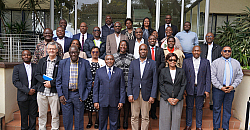
The Southern African Development Community (SADC) and the Food and Agriculture Organization of the United Nations (FAO) are meeting in Harare this week to strengthen regional cooperation and translate shared strategic priorities into practical action for more efficient, inclusive, resilient and sustainable agrifood systems.
The SADC-FAO annual review, planning and technical cooperation programme inception meeting, taking place from 8 to11 September, brings together technical teams from the two institutions to review progress under their joint work programme, assess emerging regional challenges and agree priorities and work plans for 2027–2028.
The meeting comes as Southern Africa confronts a convergence of pressures affecting agricultural production, food security and nutrition, rural livelihoods and regional trade, including climate shocks, droughts and floods, transboundary pests and diseases, land and water degradation, limited mechanisation, weak value-chain integration and constraints to investment and market access.
Opening the meeting, FAO Subregional Coordinator for Southern Africa, Patrice Talla stressed that the partnership must increasingly focus not only on technical cooperation, but also on mobilising the resources required to take regional solutions to scale.
“We really have to be creative and innovative, in the way we mobilize resources, and propose investments opportunities to partners.”
Talla noted that FAO-supported Technical Cooperation Programme (TCP) projects provide an important starting point, but cannot address the full scale of the challenges facing the region on their own. He called for stronger engagement with development partners, financial institutions and investors, highlighting the importance of collaborative approaches that can make more impacts.
For SADC, the meeting provides an opportunity to ensure that regional priorities translate into interventions that respond directly to the needs of Member States.
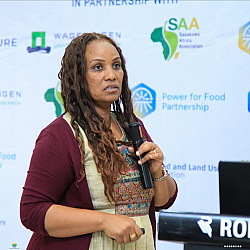
SADC Food, Agriculture and Natural Resources (FANR) Director, Fahari Marwa highlighted the importance of strengthening cooperation around climate resilience, mechanisation, seeds and fertilizer access, biofortification programmes, market development, land and water management, pests and diseases control, and animal health.
“Addressing these challenges requires connected regional actions, stronger partnership, and increased investment. We should therefore focus on practical and achievable priorities.”
Particular attention is being given to the regional fertilizer value chain, including coordinated procurement and opportunities for regional production to improve availability, affordability and timely access for farmers. The meeting is also considering stronger regional action on Foot-and-Mouth Disease (FMD), including support towards a SADC regional gene bank and mechanisms for more timely deployment of vaccines during outbreaks.
Preparedness for the anticipated 2026/27 El Niño season is another priority, with the partnership seeking to strengthen anticipatory action so that countries can better prepare for and respond to climate-related impacts before they escalate. The technical programme also includes integrated sustainable mechanisation, One Health, land and water management and investment readiness for the Great Green Wall Initiative.
FAO Subregional Resilience Officer for Southern Africa, Lewis Hove, who outlined the programme of discussions, said the meeting is deliberately structured to move from reviewing past performance to identifying a focused set of priorities that can be implemented and financed.
“We want something that is practical that we can follow as a collaboration and push so that we can achieve our goals.”
The first two days focus on reviewing implementation across agribusiness and value chains, crops, livestock, land and water management, fisheries, forestry, nutrition, resilience and disaster risk reduction. Participants are also reviewing progress under regional initiatives including the Regional Agricultural Investment Plan, Hand-in-Hand (HiH) initiative, One Country One Priority Product (OCOP), 1000 Digital Villages initiative (DVi), Green Cities Initiative and the Drylands Sustainable Landscapes Impact Programme.
The last day will see the official signing of new FAO–SADC projects focusing on agrifood systems investment facilitation, strengthening extension service delivery for resilient agrifood systems, enhancing coordination and investment readiness for the Great Green Wall Initiative, and supporting regional efforts to control Foot-and-Mouth Disease outbreaks. Enditem
Source: APO