Egypt has vowed to keep pushing for dialogue between the United States and Iran, insisting there is ‘no military solution’ to the regional crisis, as UN Secretary-General Antonio Guterres warned that a major escalation could spiral out of control.
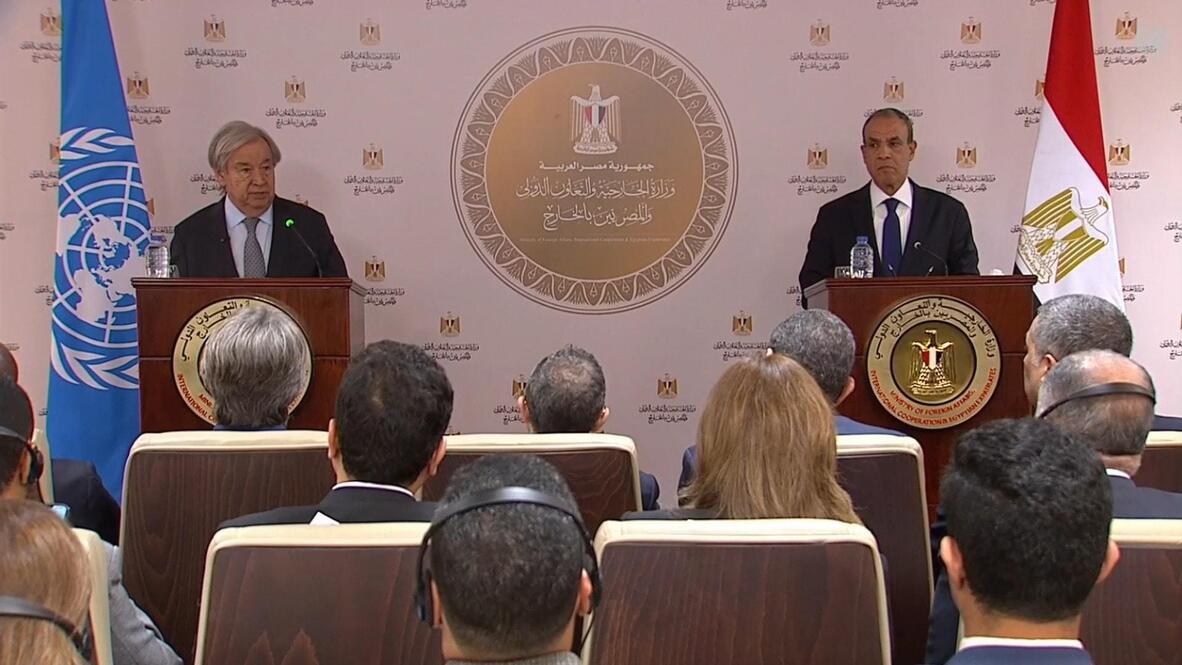
Speaking alongside Guterres at a joint press conference in Cairo on Monday, Egyptian Foreign Minister Badr Abdelatty pledged to maintain close contact with Washington and Tehran to bring both sides back to the negotiating table.
“We will continue to work very hard and to be in close communications with the Iranians, with the Americans, in order to try to push for dialogue, for diplomacy,” he said.
Guterres praised Egypt’s mediation efforts and urged both sides to exercise ‘maximum restraint’, warning that the current military threats could trigger a major confrontation.
“If the suba rattling we are witnessing now translates itself into a major escalation, The situation in the region can get out of control,” he warned.
Both officials also raised the alarm over disruptions to vital shipping routes, including the Strait of Hormuz and Bab el-Mandeb, warning of serious consequences for global trade, energy supplies and food security.
Abdelatty called for the revival of the UN-brokered Black Sea grain initiative, warning that interruptions to shipments of grain, fertilisers, oil and gas could hit Egypt and other African countries particularly hard.
Guterres also turned his attention to Gaza and the occupied West Bank, demanding that Israeli restrictions on humanitarian aid be lifted and condemning expanding settlements, forced evictions and rising settler violence.
“We are seeing an increasingly coercive environment, with the spectre of ethnic cleansing looming ever larger. This must end,” he declared.
The diplomatic push follows a US-Iran memorandum of understanding signed on June 17, with Pakistan and Qatar acting as mediators. The agreement halted hostilities and opened the door to negotiations on a lasting settlement.
However, talks have struggled to produce a final deal, with maritime security and freedom of navigation through the Strait of Hormuz among the key sticking points.
Source: Viory