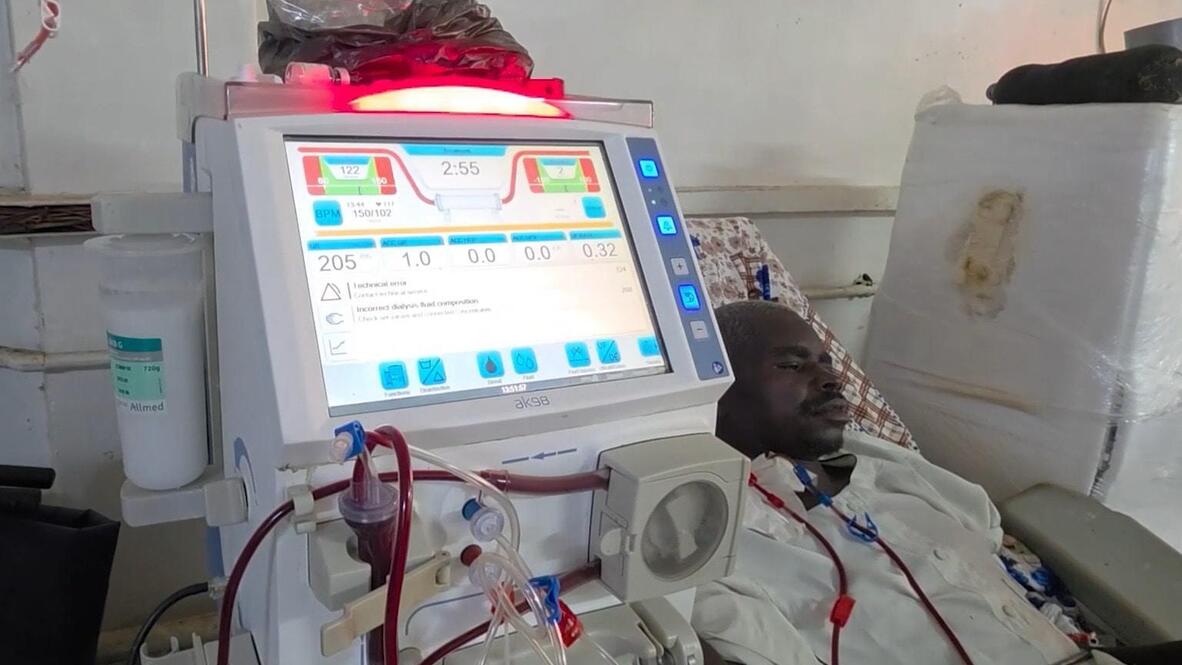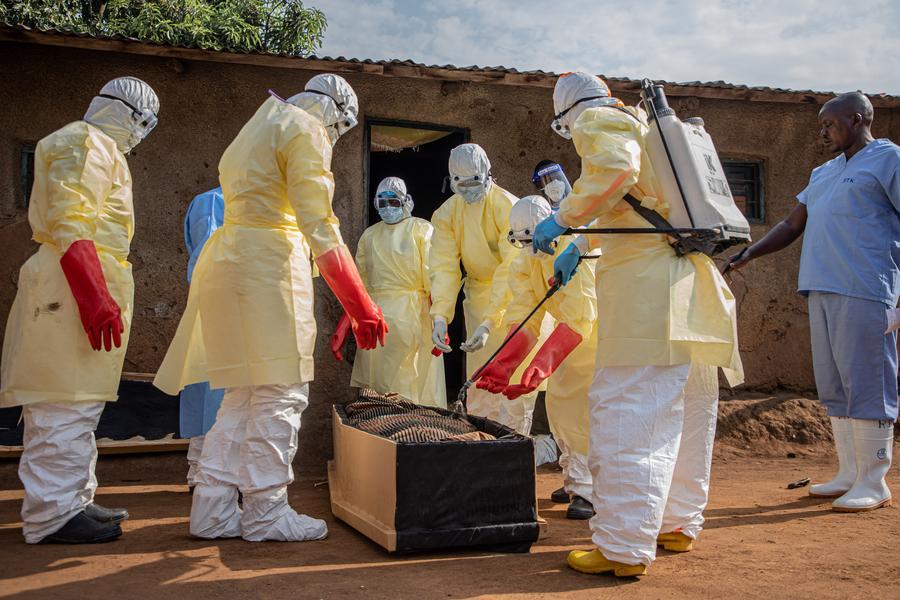
Survivor follow-up clinics extend these efforts by ensuring biological surveillance, managing long-term health effects, combating stigma and strengthening community mobilization
Leaving an Ebola treatment centre (ETC) does not mark the end of a patient’s care journey. In Bunia, the capital of Ituri Province, the survivor clinic takes over from treatment centres to support survivors through to the completion of their physical and psychological recovery. Beyond medical care, these clinics provide spaces for listening, support and assistance with social reintegration.
“We cannot have a successful response without a survivor clinic,” says Dr Huguette Mbuyi Musadi, a member of the Ministry of Health’s survivor identification and follow-up pillar. For her, medical recovery alone is not enough. Since the beginning of the outbreak, more than 2700 people have been declared cured and require post-recovery medical follow-up. “When a survivor comes to the clinic, we examine them from head to toe to check whether they have any disorders or associated conditions, such as diabetes or hypertension. Above all, however, we must manage the aftereffects linked to Ebola,” she says.
The effects of Ebola can take different forms, including joint pain, chronic fatigue, neurological disorders, particularly memory difficulties, as well as psychological manifestations such as stress and irritability. “As a survivor, I can say that forgetfulness is common. You may forget something today and only remember it two days later. Then there is irritability and a great deal of stress,” says Ganisikalé, an Ebola survivor.
To manage Ebola-related conditions even after recovery, the Ministry of Health, in collaboration with the World Health Organization (WHO) and with support from UN’s Central Emergency Fund and the UK government, established its first survivor clinic in Bunia, the epicentre of the outbreak. Operational since 19 September 2026, the clinic had provided care to more than 400 Ebola survivors. A second survivor clinic was established in Beni, North Kivu Province and has been receiving survivors since 17 October 2026.
Beyond health services, the clinics provide an environment where survivors can speak openly about their challenges and receive support to overcome stigma within their communities. These medical facilities are a natural continuation of the care provided by ETCs.
“Once patients leave the ETC, they may experience physical as well as psychological complications and we are here to provide comprehensive care,” says Dr Roland Kasamaga, Coordinator of the Bunia Survivor Clinic. “Without these clinics, the consequences could be severe. The aftereffects can impact a person throughout their life. It is important for survivors to continue receiving care so that their health and well-being can be restored comprehensively and over the long term.”
Another crucial role of the clinics is biological surveillance. The Ebola virus can persist in certain bodily fluids, particularly semen, for months after recovery. If survivors are not monitored, there could be a resurgence of the disease or a relapse.
A survivor’s care at the clinic includes consultations in general medicine, psychology and nutrition, as well as laboratory tests. The process takes an average of two hours. At the pharmacy, the final stage of the care process, nurse Elisée Mbusi emphasizes the importance of taking medication correctly and adopting preventive measures. “We provide condoms to men because studies have shown that the virus can remain in semen for a long time. If a survivor continues to engage in unprotected sexual activity, they expose their partner to risk,” she says.
For WHO, survivor clinics serve two key objectives. “First, they help prevent the resurgence of the disease within the community from people who have already recovered. Second, they address the physical, psychological and nutritional conditions experienced by survivors and provide holistic support that meets their needs,” explains Dr Brys Busanga, WHO focal person for survivor follow-up. “Without survivor follow-up, the response is incomplete. That is why WHO integrates this component into the response, so that the package of interventions is complete.”
Beyond healthcare, survivor clinics also play a community mobilization role. Aimée, a survivor who has become a community mobilizer, explains how she encourages survivors to attend the clinic. “We have a list of survivors and we call them to inform them about the clinic and invite them to come for follow-up consultations. We also tell them that transport costs will be reimbursed,” she explains. The strategy is proving successful. More than 90% of the survivors who are contacted attend their follow-up appointments.
Christian Buna, an Ebola survivor, was contacted by Aimée and visited the clinic two days later. “I was declared cured several months ago. I came for a follow-up check-up. I was told that everything is fine, but that I should continue with follow-up care,” he says. “I was listened to and reassured. I am truly satisfied with the work of the health workers. This clinic is extremely important.”
Christian has committed himself to mobilizing other survivors to attend regular follow-up consultations. “I will encourage others to come for their check-ups because it is important to understand and monitor your physical and mental condition after such an ordeal,” he says.
The Ebola response does not end at the doors of ETCs. Survivor follow-up clinics extend these efforts by ensuring biological surveillance, managing long-term health effects, combating stigma and strengthening community mobilization. They serve as a reminder that recovery is not only a medical victory, but also a process of human and social reconstruction. In these spaces, survivors become active participants in the response, bearers of hope and living proof that resilience is possible in the face of Ebola.
The clinics embody a new dimension of the response. “When you go to another hospital, you feel ashamed to say that you are an Ebola survivor. Here, we are free to talk about anything and everything,” says Ganisikalé. “In our clinic, I feel comfortable. It really helps us.” Enditem
Source: APO