
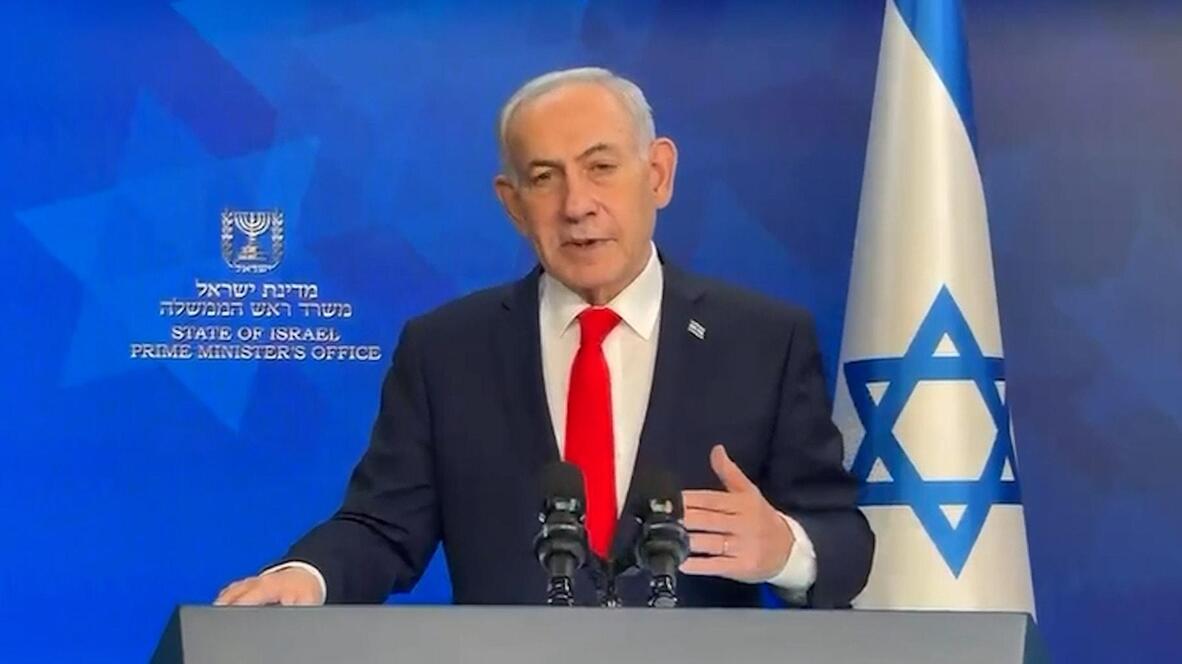
Israeli Prime Minister Benjamin Netanyahu accused left-wing political leaders on Wednesday of attempting to form a minority government reliant on ‘Islamist parties’, warning that such an alliance could threaten Israel’s existence.
“Not only will such a government fail to fight our enemies, but it will also simply tear us apart from within. Our very existence is at stake,” Netanyahu claimed.
He argued that radical Islam threatened Israel both externally, through Iran and its proxies, and internally, through parties he accused of supporting terrorism and seeking to ‘erase the Jewish identity of the State of Israel’.
Netanyahu instead called for a broad national government led by his Likud party, bringing together the national bloc and other Zionist parties willing to join.
“There is a government that can indeed confront this challenge. A broad national government headed by Likud, under its leadership, which will include all elements of the national bloc and all Zionist parties that wish to join,” he stressed.
The Prime Minister accused opposition leaders of prioritising political interests over national unity by imposing conditions designed to block such a coalition.
The prime minister also raised concerns over alleged foreign interference in the October 27 elections, saying there were ‘grave suspicions’ that foreign states had sought to influence the results.
“There are grave suspicions of foreign state interference involving massive sums of money intended to sway the election results in the State of Israel,” Netanyahu claimed.
He backed Central Elections Committee chairman Justice Noam Sohlberg’s call for an investigation by Israel’s Shin Bet security agency, insisting that all obstacles to the inquiry be removed.
“We must uncover the full truth, without a cover-up and without delay. Election integrity is the cornerstone of democracy. We must protect it, and we must protect our country,” Netanyahu asserted.
His remarks followed the certification of Israel’s October 27 election results on Wednesday, confirming 53 parliamentary seats for Netanyahu’s bloc, 48 for the opposition and 19 for Arab-led parties. Neither main bloc secured the 61 seats needed for a majority.
President Isaac Herzog has begun consultations with party leaders and must select a candidate to form a government by November 11. Coalition negotiations could take several weeks, with a unity government, an opposition-led coalition supported by Arab parties or another election among the possible outcomes.
The Central Elections Committee said it had found no irregularities affecting the election outcome, despite a separate investigation into suspected foreign interference.
Source: Viory


