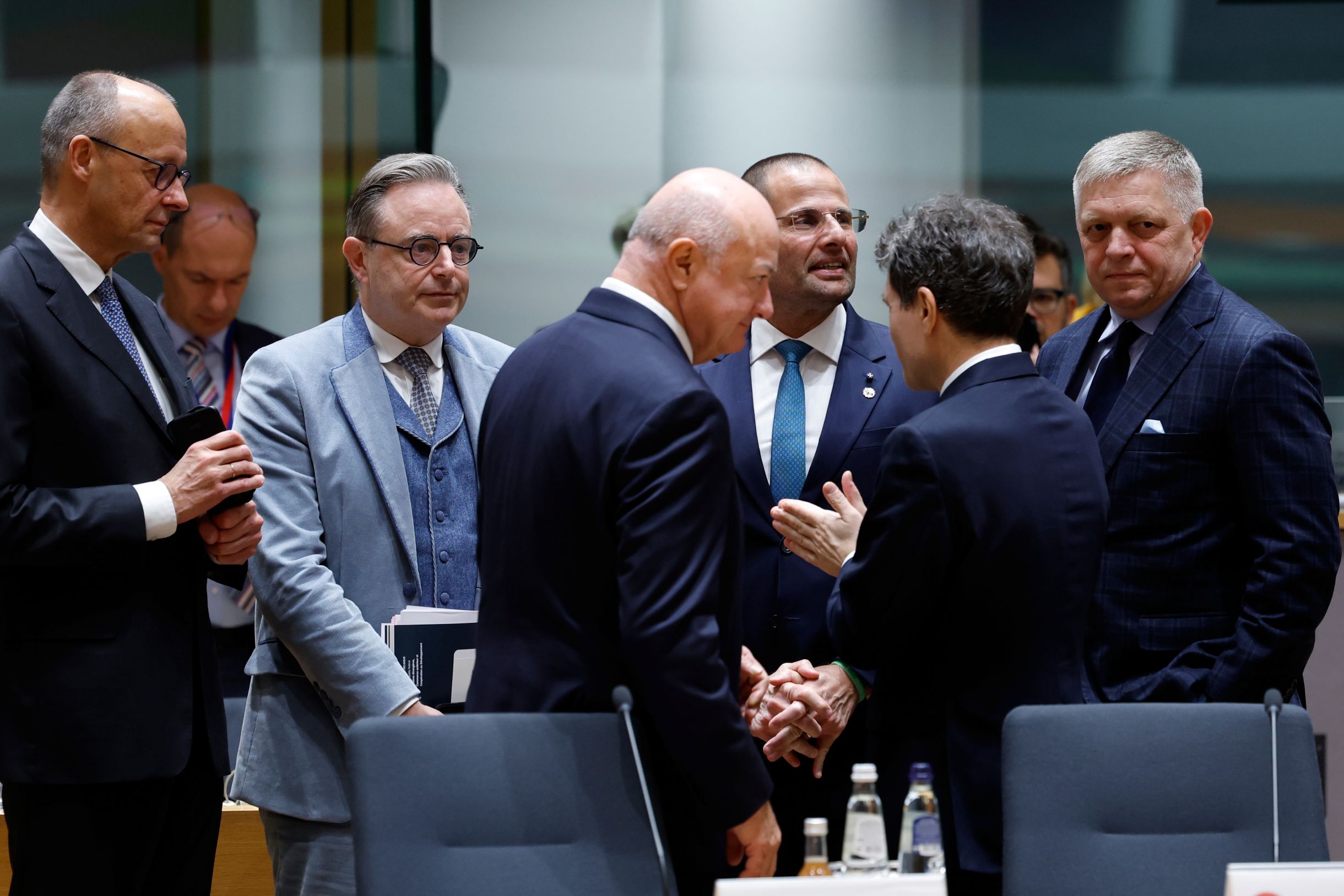
European Union (EU) leaders opened a two-day summit here on Thursday to discuss a smaller seven-year budget proposal and ways to help close Ukraine’s funding gap next year.
The European Commission proposed a budget of nearly 2 trillion euros (2.19 trillion U.S. dollars) for 2028-2034 in July last year. However, leaders failed to agree in October on a compromise proposal put forward by Ireland, which holds the EU’s rotating presidency. Several countries have called for a smaller budget with greater emphasis on competitiveness and defense.
This week EU leaders will discuss a proposal put forward by European Council President Antonio Costa, which would cap EU spending commitments for 2028-2034 at 1.58 trillion euros (about 1.74 trillion dollars).
The European Commission has proposed lending Ukraine up to 45 billion euros (49.38 billion dollars), backed by the EU budget. The loan would come on top of the EU’s 90-billion-euro (98.76-billion-dollar) loan program for 2026 and 2027 and cover nearly two-thirds of Ukraine’s remaining funding gap next year.
Czech Prime Minister Andrej Babis on Thursday opposed linking financing for Ukraine to the EU’s next long-term budget, saying that such financing “should be negotiated separately,” The Guardian reported.
The remarks came as EU leaders gathered in Brussels to discuss the bloc’s next long-term budget and Ukraine’s financing needs for 2027, according to the official agenda.
At a meeting of Visegrad Group leaders and Austrian Chancellor Christian Stocker in Bratislava on Monday, Babis called the latest EU budget proposal “absolutely unacceptable” for the Czech Republic, according to a Czech government statement. Before leaving for the meeting, he said the proposal allocated too small a share of the budget to member states.
In a letter to Costa, published by the Czech government on Nov. 10, Babis said an agreement on future financing for Ukraine should not be a condition for adopting the EU’s next long-term budget. He said Ukraine needed predictable and sustainable support and that the EU should retain the ability to set and finance its own long-term priorities.
German Chancellor Friedrich Merz said on Thursday that the EU’s proposed seven-year budget is still too large to win Germany’s backing, calling for budget talks to address how all 27 member states could share the cost of supporting Ukraine.
“The proposals on the table so far are, in our view, no basis for a deal. The overall figure is still too high,” Merz told reporters as he arrived in Brussels.
Member states have to be able to afford the budget, he added. Enditem
Source: Xinhua