Ghana’s economic relationship with China reached a new milestone as bilateral trade surpassed $14.1 billion, marking a sharp year-on-year increase of over 193 per cent, according to Ghana’s acting Chinese Ambassador, Li Yang, at this year’s Lantern Festival celebration in Accra.
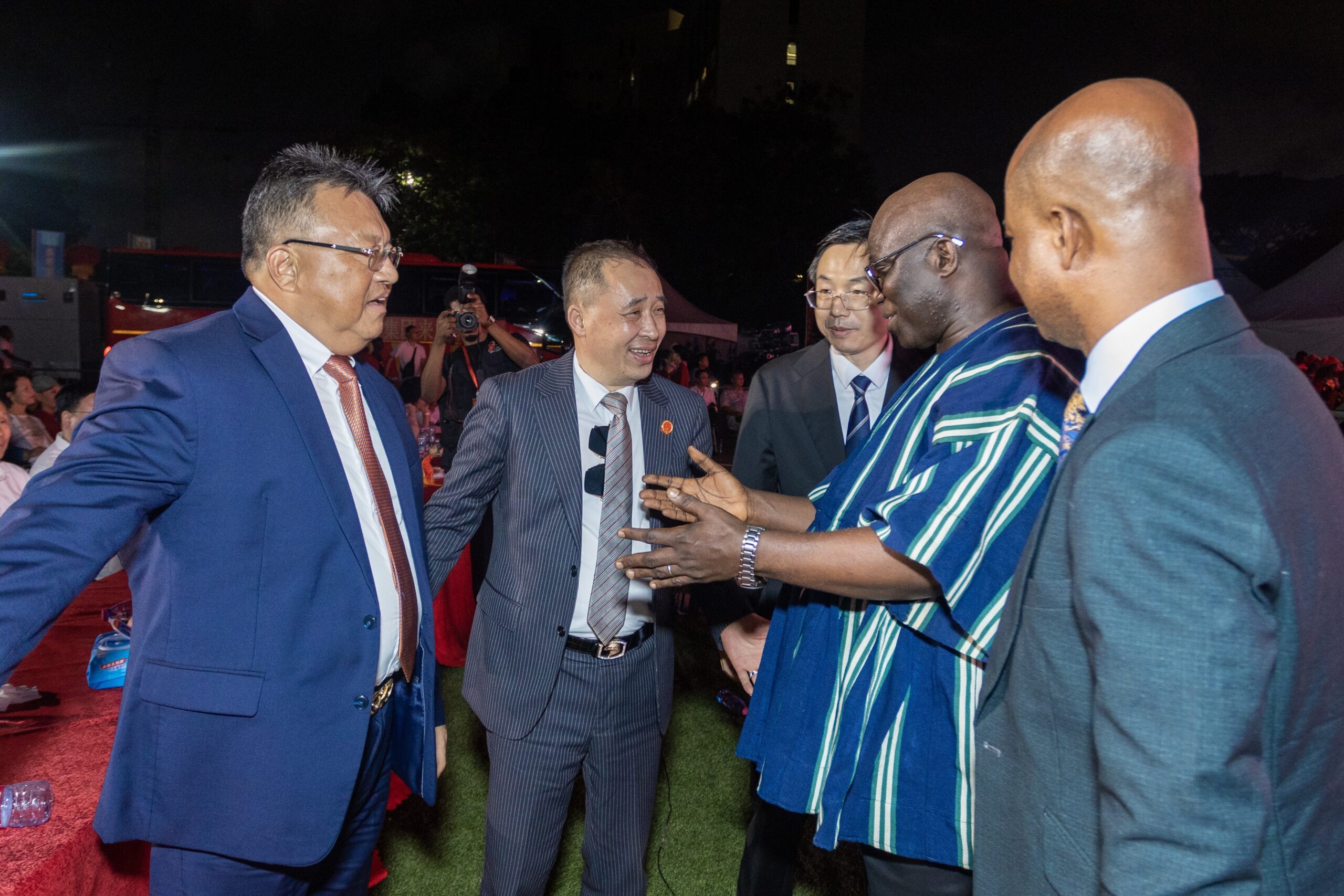
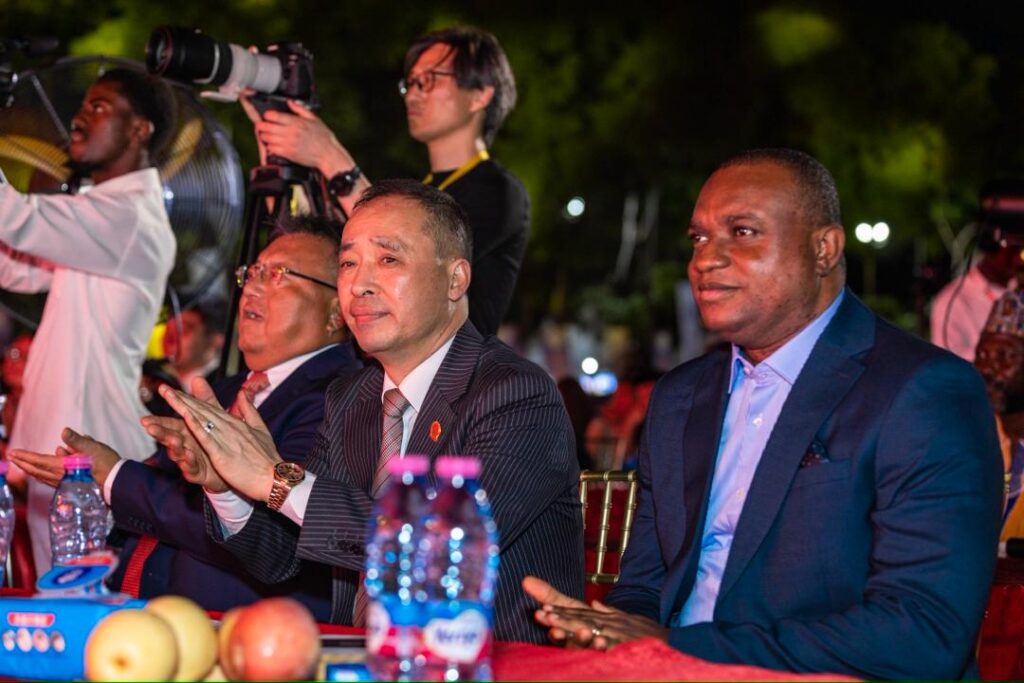
The event, organised by the Ghana Association of Chinese Societies at the forecourt of Ghana’s State House, doubled as both a cultural commemoration and an informal economic diplomacy platform.
It marked the close of the Chinese New Year festivities and also marked the 66th anniversary of diplomatic relations between Ghana and China, as well as 70 years of China-Africa cooperation.
Zero-Tariff Access: A Strategic Opening for Ghana
A key announcement with direct implications for Ghana’s export sector was China’s decision to implement zero-tariff treatment for 53 African countries, including Ghana, starting from May 2026.
For Ghanaian exporters, particularly in cocoa derivatives, processed agricultural goods, shea products, cashew, timber products and light manufacturing, the policy could improve price competitiveness in the Chinese market.
Analysts note that while Ghana traditionally runs a trade deficit with China due to high volumes of machinery, electronics and industrial imports, tariff-free access presents an opportunity to rebalance trade flows, providing local producers scale up value addition to meet meet Chinese phytosanitary and quality standards.
Ambassador Li described the policy as part of China’s “high-standard opening-up,” by positioning it as a fresh phase in Africa’s modernisation drive.
Agriculture as the Pivot of Economic Cooperation
Ghana’s Minister of Food and Agriculture, Eric Opoku speaking at the event , linked the evolving trade relationship to the Ghana’s broader economic transformation agenda under the administration of President Dramani Mahama.
He outlined government plans to modernise agriculture, including:
Development of over 3,500 hectares of irrigated land Expansion of 4,450 hectares through the Central People’s Foundation Investment in solar-powered irrigation systems.
For Chinese agribusiness investors and Agri-tech firms, Ghana presents a dual opportunity: direct production partnerships and access to the wider African Continental Free Trade Area (AfCFTA) market of approximately 1.6 billion people.
Industry observers suggest that Chinese capital and technology in irrigation infrastructure, greenhouse farming, agro-processing, and farm mechanisation could accelerate Ghana’s push toward import substitution and export diversification.

The Chinese envoy highlighted ongoing cooperation in industrialisation. Chinese enterprises have launched new production lines in Ghana’s manufacturing sector, while initiatives such as the China-Ghana Friendship Smart Classroom project demonstrate expanding collaboration in education technology.
Chinese investments currently span:
Manufacturing Retail and wholesale trade
Hospitality
Mining
Infrastructure development
Ghana’s Deputy Minister of Defence Ernest Brogya Genfi noted that these investments have contributed to job creation, particularly for young Ghanaians, and strengthened technical cooperation between the two countries.
From an economic standpoint, the challenge ahead lies in increasing local content participation, skills transfer, and sustainable employment outcomes, areas that policymakers and business leaders increasingly view as critical to long-term partnership .
The China–Ghana Strategic Partnership has evolved beyond trade into multi-layered cooperation covering infrastructure financing, defence collaboration, industrial capacity building, and people-to-people exchanges.
However, economists caution that Ghana must strategically manage the relationship to ensure:
Reduced structural trade imbalance, Increased domestic value addition, Stronger SME participation in export supply chains , Transparent and sustainable debt management.
If leveraged effectively, the upcoming zero-tariff regime and expanding industrial partnerships could reposition Ghana from being largely an import destination to a competitive export and processing hub within the sub region.

Cultural Diplomacy as Economic Soft Power
While the Lantern Festival featured performances by the Anhui Performing Arts Group and the Confucius Institute at the University of Ghana, the business exhibitions held alongside the cultural showcase reflected a broader reality: culture is increasingly intertwined with commerce.
Economic diplomacy today is as much about trust-building and soft power as it is about contracts and trade figures.
The gathering of senior Ghanaian officials, Chinese diplomats, business executives and community leaders signals a partnership that is not only growing in scale but deepening in strategic intent.
With bilateral trade now above $14 billion and a zero-tariff window opening in 2026, the next phase of Ghana–China relations will be defined not merely by volumes, but by value creation, technology transfer and sustainable growth.
Share Us