By Francis Kobena Tandoh
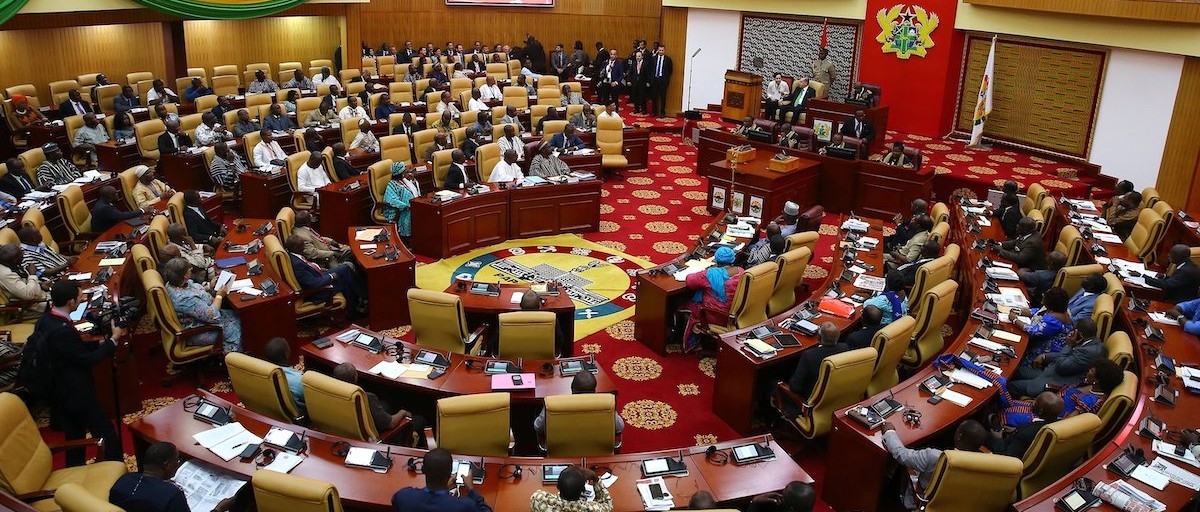
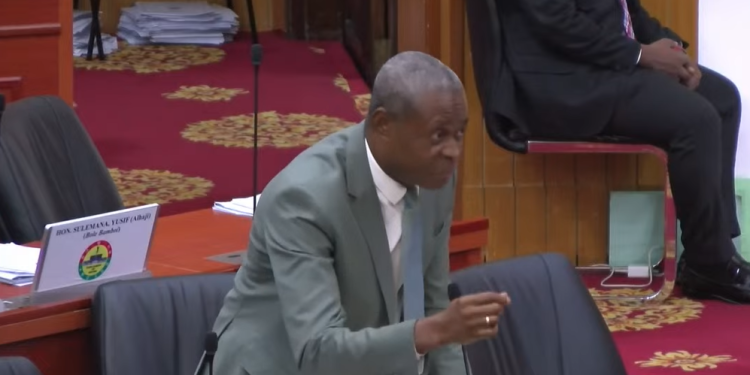
The government has withdrawn the revised lithium-mining agreement from Parliament, Deputy Minister for Lands and Natural Resources Yusif Sulemana announced on Wednesday.
Speaking on the floor of the House, the Deputy Minister said the decision is to allow for additional consultations with “very relevant stakeholders” before any attempt is made to resubmit the deal for ratification.
“As part of a broader approach to mining governance, there are plans to revise the mineral-royalty framework for all minerals, not just lithium, with royalties linked to global market prices rather than fixed in every agreement,” said Sulemana.
The government says the aim is to balance investor attractiveness with national benefit so that when mineral prices rise, Ghana should benefit more, and when prices fall, royalties adjust accordingly.
The agreement in question involved Barari DV Ghana Limited, a subsidiary of Atlantic Lithium Limited, and concerned lithium (and other minerals) at a site in the Central Region of Ghana.
Under the revised agreement, the royalty rate was reduced from 10% to 5%, with a plan to increase it to 10% when prices recover.
The downward revision and renegotiation prompted opposition. According to critics, the new terms still didn’t guarantee sufficient value for Ghana.
The Institute of Economic Affairs (IEA), a policy think tank, has demanded that Parliament halt ratification of the current lithium mining agreement, arguing that it does not sufficiently protect Ghana’s interests or ensure fair benefit to the state.
Civil society groups, industry experts, and opposition Members of Parliament (MPs) have urged the government to conduct broader consultations and technical reviews before proceeding.
The government’s withdrawal is partly a response to these calls.
Global lithium prices reportedly dropped sharply—from around US $3,000 per tonne to about US $630 per tonne—which undermined the economic viability of the original agreement under previous terms.
The government intends to undertake further stakeholder consultations, including civil society, industry experts, and possibly community representatives, before resubmitting an updated agreement to Parliament.
Some observers warn that frequent renegotiations or withdrawals could hurt investor confidence, especially if terms appear unstable or subject to political shifts.
The pause/review could result in a better, more equitable deal for Ghana: more transparency, fairer royalties, plus community and stakeholder input.
A new, comprehensive royalty framework could bring long-term clarity for mining projects across minerals, which may improve public trust and institutional governance over natural resources.
If negotiated well, Ghana might secure more value from lithium (and other minerals), which could translate to greater national revenue, infrastructure investment, and local development (jobs, beneficiation, value-addition, etc.).
However, frequent delays/renegotiations may deter investors, especially in a volatile commodity market like lithium, if terms appear unstable.
If the new agreement fails to strike a balance acceptable to both investors and public interest, the project could stay in limbo for a long time, delaying development and potential benefits.
Public trust may be shaken if negotiations are perceived as opaque or favouring foreign companies over national interests. Enditem
Source: Ghana Eye Report
Share Us