China’s economic outlook in 2026 is expected to be largely promoted by two drivers: innovation and structural upgrading, according to an African media analyst.
Wendmy Osee Ouangraoua, vice president of the Consortium of African Professional Journalists for Strengthening Sino-African Cooperation, recently told Xinhua that the two elements will influence not only the pace of China’s economic growth but also its position in the global economy.
Citing the recommendations adopted for formulating China’s 15th Five-Year Plan, Ouangraoua underlined new quality productive forces and high-quality development as two particularly prominent concepts.
“China will rely on these concepts to develop its economy,” he said, adding that they reflect the direction of China’s ongoing economic transformation and provide insight into how the country aims to sustain growth amid increasing global uncertainty.
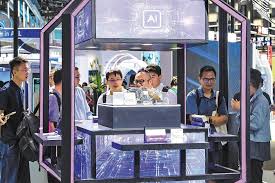
According to Ouangraoua, China has accelerated self-reliance in science and technology, as advances in artificial intelligence, new energy, biotechnology, and other advanced fields are reshaping industrial production.
Ouangraoua noted electric vehicles and solar energy as concrete examples, both demonstrating China’s growing capacity for technological innovation rather than simple manufacturing.
By developing advanced technologies that remain relatively affordable, China can make them accessible to the Global South, enabling these countries to accelerate their own development, he added.
He further noted that China has activated multiple mechanisms for technology and skills transfer to support developing countries, with the Luban Workshop being one notable example.
Meanwhile, China is expanding technological and digital cooperation with Africa, including support for digital and e-government infrastructure, which Ouangraoua said reflects a deeper shift toward capacity building and the transfer of industrial know-how.
According to Ouangraoua, amid both domestic and external challenges, China’s dual circulation strategy takes on greater significance.
By stimulating domestic demand while continuing to engage international markets, China seeks to maintain a balance between internal economic stability and external demand, the analyst observed.
Ouangraoua added that he believes China will be well-positioned in 2026 through a combination of structural reforms and policy measures, as a major global economic player and a driving force of the Global South. Enditem
Source: Xinhua
Share Us