
By Francis Kobena Tandoh
Ministers responsible for digital affairs in West and Central Africa, at the end of a two-day summit on Tuesday, adopted the Cotonou Declaration aimed at accelerating digital transformation in the region.
The ministers set ambitious targets for 2030, including achieving affordable and reliable broadband access for 90% of the population, deploying interoperable public digital infrastructure such as digital identity and payment systems, doubling intra-African e-commerce, and adopting harmonized frameworks for cybersecurity, data governance, and Artificial Intelligence (AI) to create a trusted environment.
The Cotonou Declaration also calls for large-scale training to ensure that 20 million people acquire basic digital skills and that 2 million young people and women benefit from digital jobs or entrepreneurship opportunities.
In addition, ministers pledged to boost digital innovation ecosystems in partnership with the private sector. They also agreed to promote African AI solutions by developing regional computing, cloud, and data infrastructure, and implementing AI application programs in priority sectors for inclusive economic transformation.
In order to realize the goals set by the ministers, the Cotonou Declaration calls for mobilizing public and private investments through national digital compacts, which will align reform objectives, financing needs, and strategic partnerships with the private sector around the targets set in the Declaration to accelerate inclusive growth and job creation.
Concrete measures were discussed to foster the exchange of best practices and coordination aimed at creating regional digital markets and encouraging private sector investment in digital infrastructure, leveraging regional initiatives such as Mission 300 (M300)—a pan-African initiative to connect 300 million Africans to electricity by 2030 to support the continent’s digital and economic transformation.
Senior Minister and Minister of Planning and Development of the Republic of Benin, H.E. Abdoulaye Bio Tchané, observed that Africa is a major player in the digital revolution and that his country has made it a central pillar in its economic transformation.
“Digital technology has become a major accelerator of productivity, a lever of competitiveness, and an infinite space for innovation. Its impact is particularly decisive in Africa, where our youth is entering the labor market en masse. Africa is no longer just a consumer: it is becoming a creator, an innovator, and an influential player in the global digital economy. In this dynamic, Benin has made a deliberate choice: to make digital technology a central pillar of its economic transformation,” said H.E. Tchane.
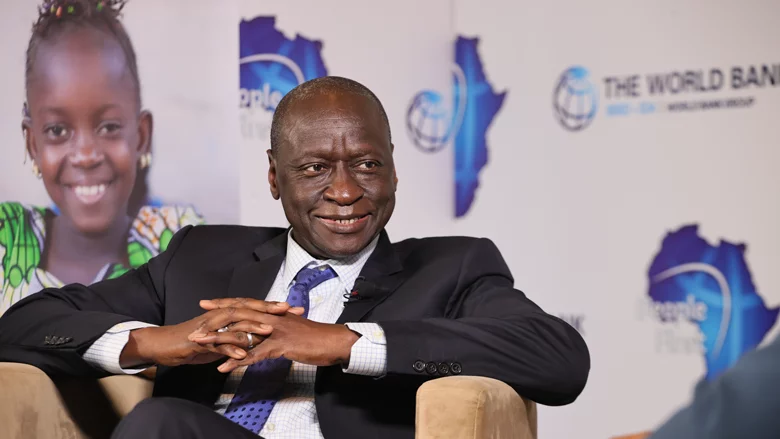
Mr. Ousmane Diagana, World Bank Vice President for West and Central Africa, echoed the need for proper coordination and communication as essential to the success of the Cotonou Declaration.
He said, “The success of the Cotonou Declaration depends on two imperatives: better coordination among donors and partners to align and channel resources effectively, and better joint communication of successes and progress to strengthen political buy-in, attract more investment, and create a virtuous regional dynamic. To this end, Digital Compacts will serve as strategic platforms for commitments from all partners—public and private—around a shared vision. They will enable better coordination and targeting of public and private financing to achieve countries’ priority objectives for digital and AI, galvanize political leadership, and thus deliver greater impact for populations, the informal sector, and businesses.”
World Bank Group Vice President for Digital and Artificial Intelligence, Mr. Sangbu Kim, said the Bank seeks to work with countries so AI becomes a driver of shared prosperity.
“We are at a critical moment. The era of artificial intelligence will not wait for us. The choices countries make today regarding investment, governance, and inclusion will determine who benefits from this transformation. Our goal is clear: to work alongside countries to ensure that artificial intelligence becomes a driver of shared prosperity and to shape a future where Africa leads in digital innovation, inclusion, and job creation,” said Mr. Kim.
H.E. Aurelie Adam Soulé Zoumarou, Minister of Digital and Digitalization, Republic of Benin, emphasized that digitalization is now a necessity and urged synergy to drive the transformation.
He said, “Digital is no longer a choice; it is an economic, social, and strategic necessity. But no strategy can thrive without a shared vision and a strong alliance between states, the private sector, civil society, and youth. This synergy is the true invisible infrastructure that makes inclusive and sustainable digital transformation possible.”
Digital technology has emerged as one of the most powerful drivers of economic and social transformation. A true engine of growth, it boosts productivity, fosters job creation, and strengthens inclusion. The commitments made in Cotonou reflect a shared determination to turn the promise of digital into tangible progress and position West and Central Africa as a major player in the global digital economy.
Co-organized by the Government of the Republic of Benin and the World Bank Group, the regional summit on digital transformation in West and Central Africa brought together more than 200 participants, including high-level officials such as ministers, representatives of regional economic communities, private sector leaders, young digital innovators, civil society organizations, and international experts.
It aligns with the African Union’s 2030 objectives to ensure universal and affordable broadband access, build a single African digital market, and fully seize opportunities offered by emerging technologies such as artificial intelligence to achieve the continent’s digital transformation. Enditem
Source: World Bank/Ghana Eye Report
Share Us