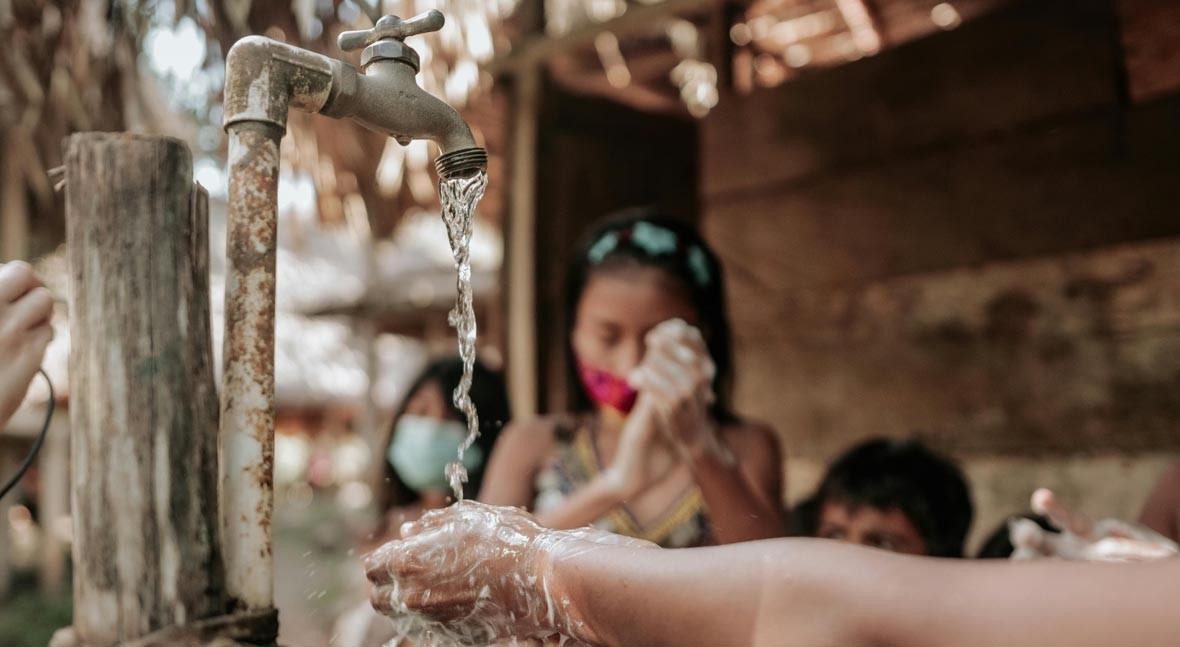
As the world marks World Water Day 2026 under the theme “Water and Gender – Where Water Flows, Equality Grows,” the Ghana Water Justice Network (GWJN) is calling for urgent, bold action from the Government of Ghana to address persistent inequalities in water access.
For many communities across Ghana, the promise of safe, affordable, and accessible water remains unfulfilled. In rural villages, peri-urban settlements, and low-income urban neighborhoods, the daily reality is one of queues, unreliable supply, and rising costs. At the center of this crisis are women and children; those who bear the heaviest burden to supply water when systems fail.
“Where water does not flow, inequality grows,” the Network emphasizes, highlighting how the lack of access to water reinforces gender inequality. Women and girls often spend hours each day fetching water, limiting their opportunities for education, work, and participation in public life.
The Ghana Water Justice Network, a coalition of organizations committed to the fundamental principle of the human right to water, continues to advocate for universal and equitable access. Through policy engagement, public education, and grassroots mobilization, the Network is working to ensure that water is treated not as a commodity, but as a basic human right. The Network is hosted at the House of Social Justice by the Integrated Social Development Centre (ISODEC).
On this Day, GWJN is urging the Government of Ghana to take decisive steps to ensure that water becomes a tool for equality rather than exclusion.
Among its key demands, the Network is calling for measures to make water affordable for all, particularly for low-income and vulnerable households. It also stresses the need for significant investment in water infrastructure to extend services to underserved communities, where access remains limited or nonexistent.
The Network further calls for an end to water disconnections due to inability to pay, describing the practice as a violation of the human right to water that disproportionately affects women and children. Instead, GWJN advocates for inclusive and humane approaches to service delivery that prioritize dignity and access.
Central to this year’s theme is the recognition that gender equality must be embedded in water governance. GWJN is therefore urging policymakers to not only address the disproportionate impacts on women but to actively include them as leaders and decision-makers in water management at all levels.
As Ghana joins the global community to commemorate World Water Day, the message from the Ghana Water Justice Network is clear: ensuring access to water for all is not only a matter of infrastructure; it is a matter of justice, equality, and human dignity.
The Network reaffirms its commitment to working alongside communities, civil society actors, and policymakers to advance water justice across Ghana.
Share Us