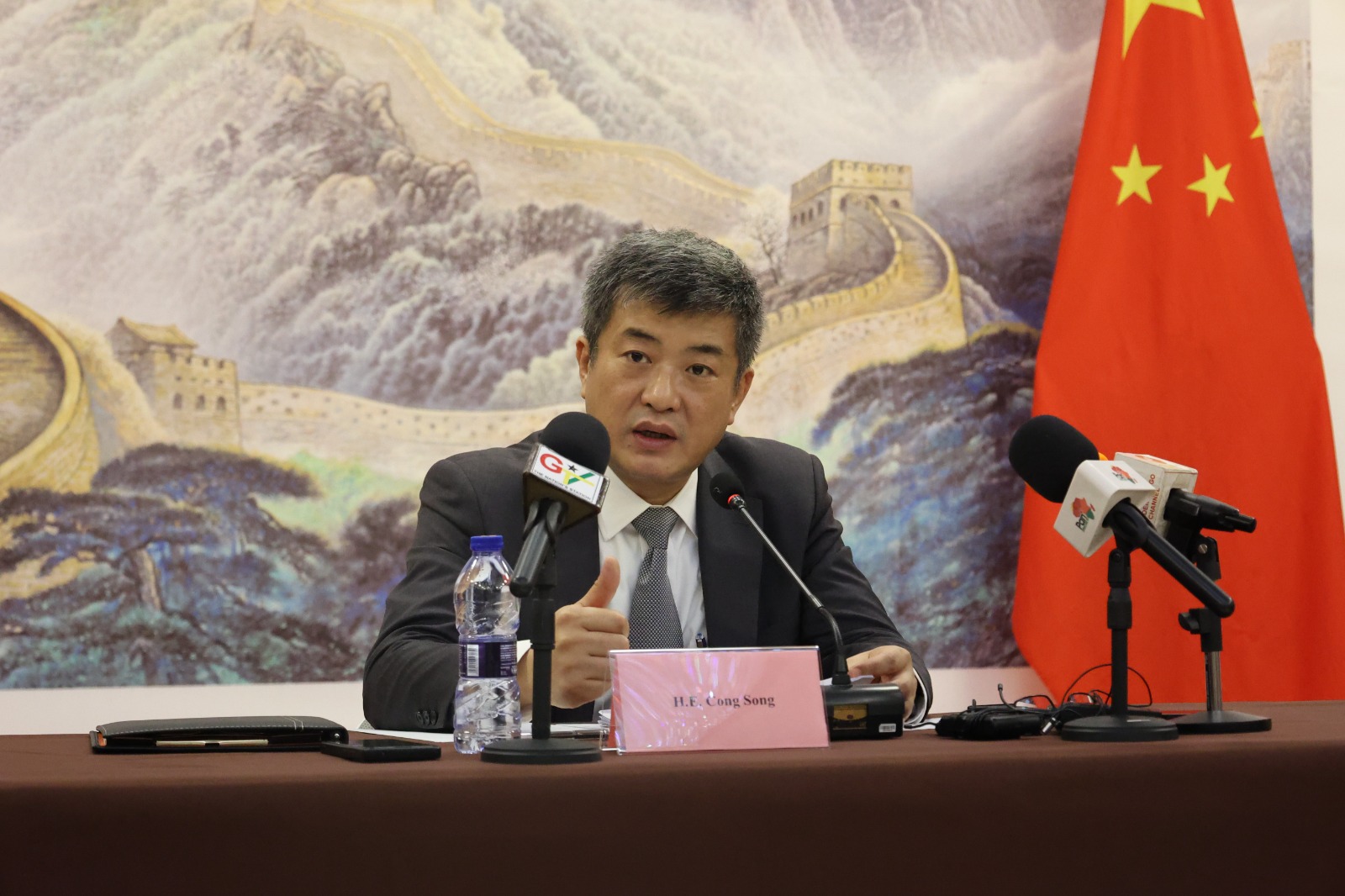
(by H.E. Cong Song, Chinese Ambassador to Ghana)
80 years ago, “to save succeeding generations from the scourge of war, which twice in our lifetime has brought untold sorrow to mankind”, the international community jointly established the United Nations, pioneering a new practice in global governance. However, 80 years later, unilateralism, protectionism, and hegemonism have been spreading unchecked in today’s world, while deficits in peace, development, security, and trust continue to expand. Reforming and improving global governance to resolve these challenges and letting the UN play a core role have thus become a critical topic for the future of humanity.
In 2025, at a pivotal historical juncture marking the 80th anniversary of the victory in the Global War Against Fascism and the founding of the UN, President Xi Jinping proposed the Global Governance Initiative (GGI), offering a Chinese solution to the two pressing questions of the era: what kind of global governance system should be established, and how global governance can be reformed and improved. Upon its introduction, it swiftly gained support from nearly 160 countries and international organizations. On 17th June, 2026, China released a white paper titled “More Just and Equitable Global Governance: China’s Principles, Proposals and Actions”, to introduce China’s principles, proposals and actions in global governance, and foster broader consensus within the international community.
The Global Governance Initiative addresses the global governance deficit with real actions. The Initiative upholds the purposes and principles of the UN Charter and embraces a global governance vision characterized by extensive consultation, joint contribution, and shared benefits. It is built on five core concepts: sovereign equality, the international rule of law, multilateralism, a people-centered approach, and real actions, providing sound guidance for building a more just and equitable global governance system. The Initiative targets the most pressing issues in individual countries, particularly developing countries, and has achieved tangible progress in reducing poverty, improving people’s well-being and closing the digital divide. The Initiative makes feasible plans to resolve the immediate challenges facing the world, effectively responds to major public crises, and provides international public goods. The Initiative synergies North-South cooperation and South-South cooperation, calls on developed countries to fulfill their international obligations, and unites developing countries to build their strength.
China has actively advancing the efforts for building a more just and equitable global governance system. Committed to universal and common security, China has dispatched 29 peacekeeping operations, promoted the issuance of a joint statement of the leaders of the five nuclear-weapon states on preventing nuclear war, and unwaveringly advocated for peace talks, contributing to international collective security. Dedicated to openness and cooperation, China has become the main trading partner of over 160 countries and regions, achieved solid progress in deepening high-quality Belt and Road cooperation, and placed zero tariffs on the least developed countries and African countries that have established diplomatic relations with China, injecting momentum into global economic growth. Resolved in unity and cooperation, China has played an active role in expanding BRICS cooperation and the Shanghai Cooperation Organization, took the lead in supporting the African Union’s membership in the G20, proposed an initiative for open and inclusive Global South cooperation, led the creation of the International Organization for Mediation, and promoted exchanges and mutual learning among civilizations, building a platform for international governance cooperation.
China and Africa has always supported each other in international affairs, and jointly opposed hegemony and power politics. The peoples of China and Africa share similar tragic experiences and historical memories of colonial rule and hegemony, and have supported each other in the struggle for national liberation and independence. China advocates redressing historical injustices suffered by Africa, votes for the UN resolution on declaring the transatlantic slave trade as the the gravest crime against humanity, advocates increasing the representation of developing countries, especially African nations in the UN Security Council, and supports African countries in playing a greater role and exerting greater influence in global governance, particularly within inclusive frameworks for addressing global issues.
President Kwame Nkrumah once said, “Forward ever, backward never.” History can only move forward, not backward. We must draw lessons from the bloodshed and fires of war of the past and prevent a return to unilateralism, hegemonism, and protectionism. The Global Governance Initiative points out how to meet the call of the day, and shape the trends of our times; while rooted in China, benefits the world; is grounded in today’s realities, while opening up the future, contributing wisdom and strength to the progress of human civilization. Let’s jointly implement the Global Governance Initiative, build a more just and equitable global governance system, advance toward a community with a shared future for humanity, and deliver more benefits to the world. Enditem