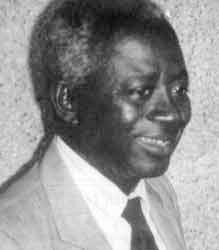
Simeone Azoska, Deputy Head, Pan-African Progressive Front (PPF) Secretariat
The Pan-African Progressive Front (PPF) welcomes the historic passage on 25 March 2026 of the United
Nations General Assembly resolution (GA res. A/80/L.48) formally declaring the trafficking of enslaved
Africans and the racialized chattel enslavement of Africans as the gravest crime against humanity. On the
International Day of Remembrance of the Victims of Slavery and the Transatlantic Slave Trade, the world
has finally been compelled to look directly at the wound it has long refused to name.
For too long, the architects of the modern world order have profited from the deliberate erasure of this
crime. For too long, the descendants of the enslaved have been told to move forward while their
dispossessors continue to benefit from generational wealth on the bones of millions.
Congratulations to the African Union
The Pan-African Progressive Front (PPF) extends its warmest and most unreserved congratulations to the
African Union, and in particular to the Assembly of Heads of State and Government, for unanimously
endorsing and championing this resolution. The 39th Ordinary Session of the AU Assembly in Addis Ababa, held on 14th and 15th February 2026, demonstrated what African unity looks like when it is purposeful and unafraid. The African Union did not divide on this; rather, it secured a continental consensus and commanded the attention of the global community on its own terms.
We especially commend H.E. John Dramani Mahama, President of the Republic of Ghana and AU
Champion for Advancing the Cause of Justice and Reparations, for the tenacity, diplomatic precision, and
moral clarity with which he carried this mandate. From the announcement at the 80th UN General Assembly in September 2025, through the continental consultations, to the formal tabling of this resolution, President Mahama has conducted himself not merely as a head of state but as a servant of history.
Congratulations to CARICOM
We equally congratulate the Caribbean Community, CARICOM, for standing in full solidarity with the
African Union on this resolution. The Caribbean nations did not arrive late to this struggle. They have been
at the forefront of the reparations movement for decades, having established the CARICOM Reparations
Commission in 2013 and a Ten-Point Plan for Reparatory Justice that remains one of the most
comprehensive frameworks produced by any regional body. Their support has been a critical pillar. The
unity between Africa and the Caribbean at this moment is not symbolic. The descendants of the enslaved,
scattered across oceans by force, have found each other again at the bar of international law. This is Pan Africanism in its most concrete and consequential form.
What This Resolution Means for Africa and People of African Descent
We must be clear about what has been achieved and what has not. The passage of this resolution is not a
victory but a giant step towards victory. The transatlantic slave trade forcibly removed more than 12 million African men, women, and children from their homelands. This was not merely an isolated historical event, but a deliberate economic system structured to accumulate capital for European industrialisation. It was sustained through the extraction of African labour and life, leaving enduring damage in the form of
demographic disruption, social dislocation, and the fragmentation of African societies.
We note, without surprise, that only three states cast votes against this resolution: the United States of
America, Israel, and Argentina. 123 nations voted in favour. 52 chose the cowardice of abstention.
The United States voted no because its entire financial system, its accumulated national wealth, and the
global dominance it exercises through military and monetary power, rests on a foundation of stolen African labour. To recognize slavery as a crime against humanity is to open the question of what is owed.
That is a question the American capitalist state has never been structurally capable of answering honestly, regardless of which party administers it. Israel voted no as a settler-colonial state whose political survival depends on the selective application of the crime against humanity doctrine. A universal framework for reparatory justice, one that names systemic dispossession and forced removal as crimes requiring accountability, creates obligations that no settler colonial project can afford to accept. The vote is therefore not a contradiction. It is a logical expression of the same ideology that sustains the dispossession of the Palestinian people.
Argentina’s no vote reflects the resurgent fascist-capitalist bloc now consolidating across the Global South, a tendency that serves Western financial interests by attacking the very international legal frameworks that the oppressed have built to defend themselves.
These three votes are not a coalition of the principled. They are a coalition of the structurally guilty, held
together by a shared interest in impunity. Their discomfort with truth is not an argument against truth. A
backlash against moral reckoning is itself a form of confession. The 52 who abstained must equally be held to account. Abstention in the face of historical crime is not neutrality. It is a choice, and history will record it as such.
The Road Ahead: What African States Must Do Now
The Pan-African Progressive Front (PPF) wishes to make plain that the adoption of this resolution is the
beginning of a process, not its conclusion. Governments have opened the door; it is now incumbent upon
organised peoples and movements to step through it, claim the space that has been created, and ensure that it remains open for sustained collective action. Reparatory justice will not be administered from above. It must be demanded from below, by workers, students, farmers, women’s movements, youth formations, and the trade unions of this continent. We now call on all 55 African Union member states and their peoples to translate this diplomatic achievement into a living, breathing mass movement. Specifically:
- Convene National People’s Reparations Forums in every African state. African governments must not
manage this process behind closed doors or delegate it to committees of technocrats and diplomats alone. Every African state must organize open, accessible, and genuinely participatory forums where ordinary people, market traders, teachers, miners, fisherfolk, pastoralists, domestic workers, and rural communities, can engage directly with the reparations question. These forums must reach beyond capital cities into towns, villages, and border communities. The people whose ancestors were taken must be the primary authors of what justice means for them. - Mobilize trade unions as the frontline of the reparations struggle. The organized labour movement across Africa has the membership, discipline, and the infrastructure to transform this resolution from a diplomatic text into a mass political demand. Trade union federations in every African country must adopt formal reparations resolutions, incorporate reparatory justice into collective bargaining frameworks, and build solidarity links with labour movements in the Caribbean and the African diaspora. The workers of Africa were among the most brutalized by slavery and colonial extraction. Their organizations must be at the centre of this fight, not at its margins.
- Unleash the energy of student and youth movements. African governments must establish formal
mechanisms that enable student bodies to participate meaningfully in national reparations policy
consultations, not as passive observers but as co-authors of the agenda. Across the continent and the diaspora, young people carry within them the political consciousness and moral urgency that this historical moment demands. Their energy, clarity, and willingness to confront inherited injustices represent one of the most powerful forces within the reparations movement. That energy must therefore be organised, structured, and integrated into policy making processes, not merely celebrated rhetorically and then sidelined once decisions are taken. Only by consciously incorporating the leadership and intellectual contribution of the youth can the reparations struggle sustain the momentum necessary to achieve historic justice. - Centre women’s organizations and feminist movements in reparations planning. African women bore the particular violence of slavery, the reproductive exploitation, the sexual terror, the destruction of family and kinship. Women’s organizations, from grassroots community groups to continental feminist networks, must be formally structured into every reparations planning process. Any framework for reparatory justice that does not foreground the gendered dimensions of this crime will be incomplete and will repeat the silencing that African women have endured for centuries.
- Build Pan-African People’s Coalitions across the diaspora. African governments must actively support
the building of grassroots reparations coalitions that link popular organizations on the continent with their counterparts in the Caribbean, in North America, in Europe, and across the diaspora. This must not be a network of ambassadors and ministers. It must be a network of community organizations and movement formations. The scattered African world must find its political unity not only at the level of heads of state but at the level of organized people.
A Verdict of History
The Pan-African Progressive Front (PPF) recognizes this moment for what it is; a political and legal
inflection point, secured not by the goodwill of those who owe the debt but by the organized, disciplined, and sovereign demand of those to whom it is owed. Africa did not wait for Europe’s permission. Africa did not appeal to the conscience of its oppressors. Africa built the consensus, assembled the evidence, and walked to the podium at the United Nations. - As President Mahama rightly declared, reparatory justice will not be handed to us. Like independence, it must be secured through unity and determination. The resolution passed on 25 March 2026 is the independence declaration of the reparations struggle. The real work of building the republic of justice begins now.
- We stand in full solidarity with all African states, with CARICOM, and with every descendant of the enslaved across the diaspora. The debt is real. The evidence is irrefutable. The time for acknowledgement has arrived. The time for reckoning must follow without delay. Africa shall be free. Africa shall be whole.