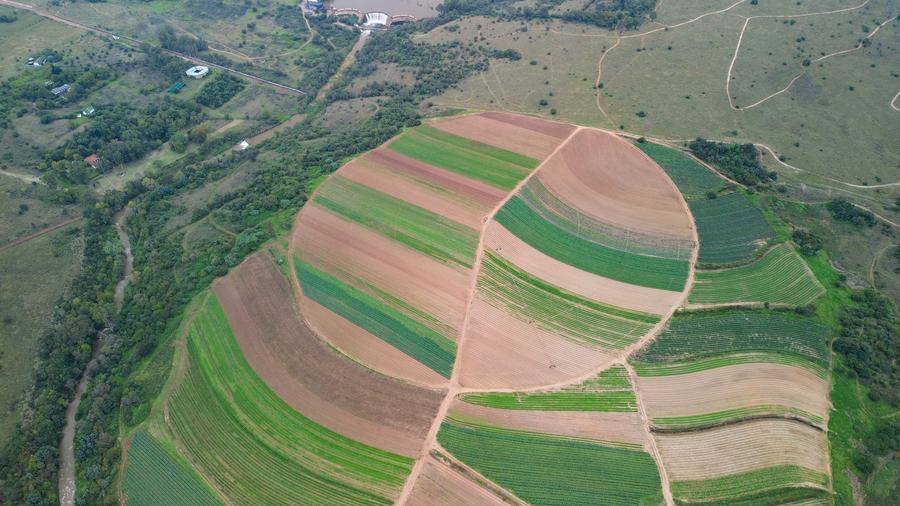
El Salvador is on course to end 2026 as the driest year of the past 56 years, with a rainfall deficit of around 32 per cent, according to the Ministry of the Environment. The drought associated with the El Nino phenomenon has caused agricultural losses and threatens the livelihoods of thousands of farming families.
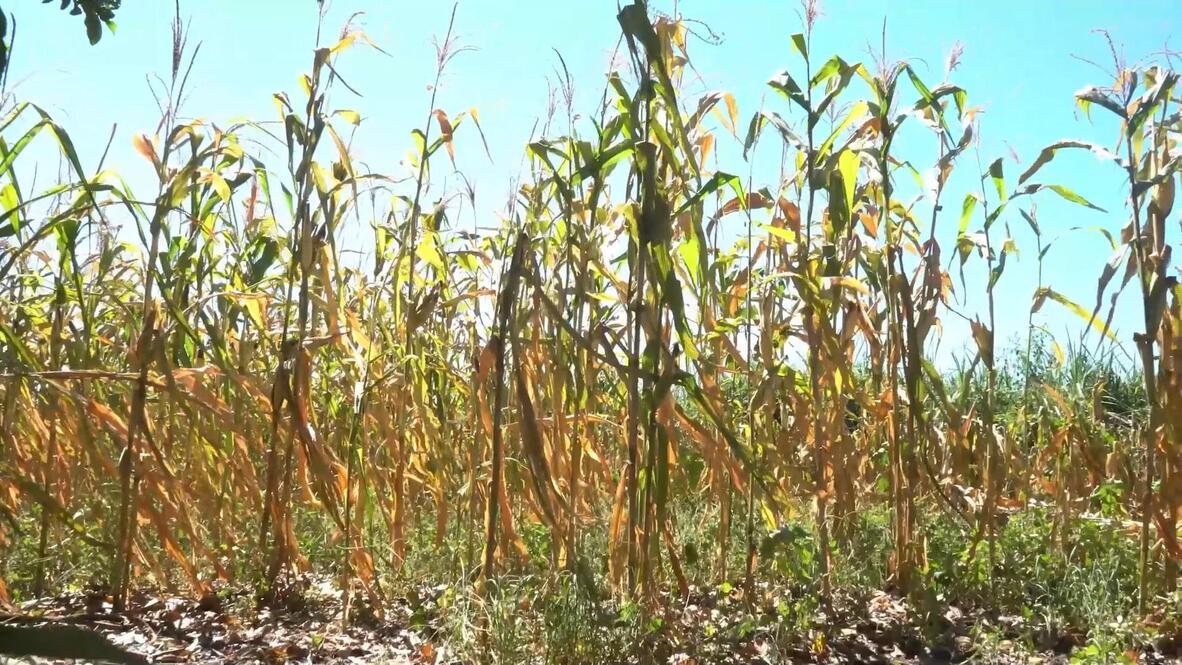
Images show entire maize fields completely dried out and the farmers Julia Arely Guervara and Nicolas Tolentino showing and shelling defective cobs they had to salvage.
In the first harvest of the year, around 2.5 million quintals of maize and beans were lost, according to the Salvadoran Chamber of Small and Medium Agricultural Producers. The association also estimated that another 6.9 million quintals of maize, beans and sorghum were at risk during the second sowing.
In Tecoluca, in the department of San Vicente, Julia Arely Guevara de Ortiz lost almost all the production from the two manzanas of maize she sowed on rented land without an irrigation system. The farmer, whose family depends on those crops, said that she now cannot meet the loan she took out to finance the sowing.
“It has affected us enormously. We sowed two manzanas of milpa, which is the livelihood of the whole family, because that is what we live on, the crop; we are farmers. Moreover, we took out a loan with the BFA (Banco de Fomento Agropecuario) and now we do not have the means to pay it,” Guevara said.
The producer estimates she lost about 1,200 dollars in seeds, fertilisers and other inputs. From the harvest she barely managed to salvage a few cobs, while installing an irrigation system, which she estimates would cost between 1,000 and 1,500 dollars, is out of reach for many subsistence farmers.
“Around $1,200 USD went, because we sowed with fertiliser and all that, and unfortunately it only rained in the month of sowing and just a few little maize plants came up,” she recounted.
The loss of the harvests forces families who previously produced their own food to buy it at the market, amid the rising cost of the basic food basket. In October, the rural basket reached 191.66 dollars per month and the urban basket reached 247.47 dollars, their highest values since records began in 2001.
“With this we cannot last even two months to survive, so it is difficult to give an accurate assessment with a situation like ours. And it has not only been us, but also our neighbours,” said Nicolas Tolentino, another affected farmer.
The situation could worsen in the coming months. A projection by the Famine Early Warning Systems Network, cited by Oxfam, estimates that between 100,000 and 250,000 people could face food insecurity in El Salvador by the end of November. Agricultural losses, the cost of food and the lack of resources to install irrigation systems are keeping rural communities in a vulnerable situation.
Source: Viory