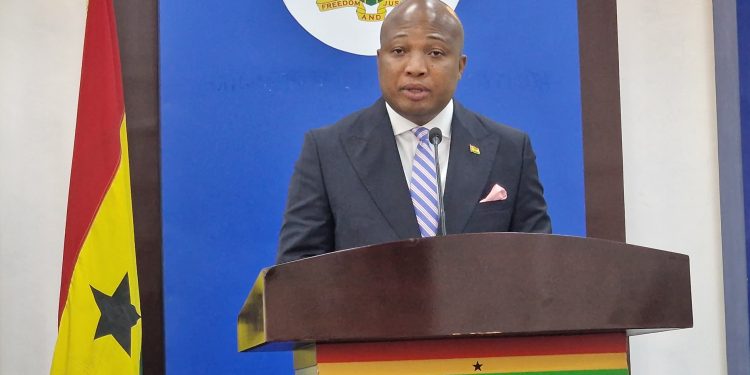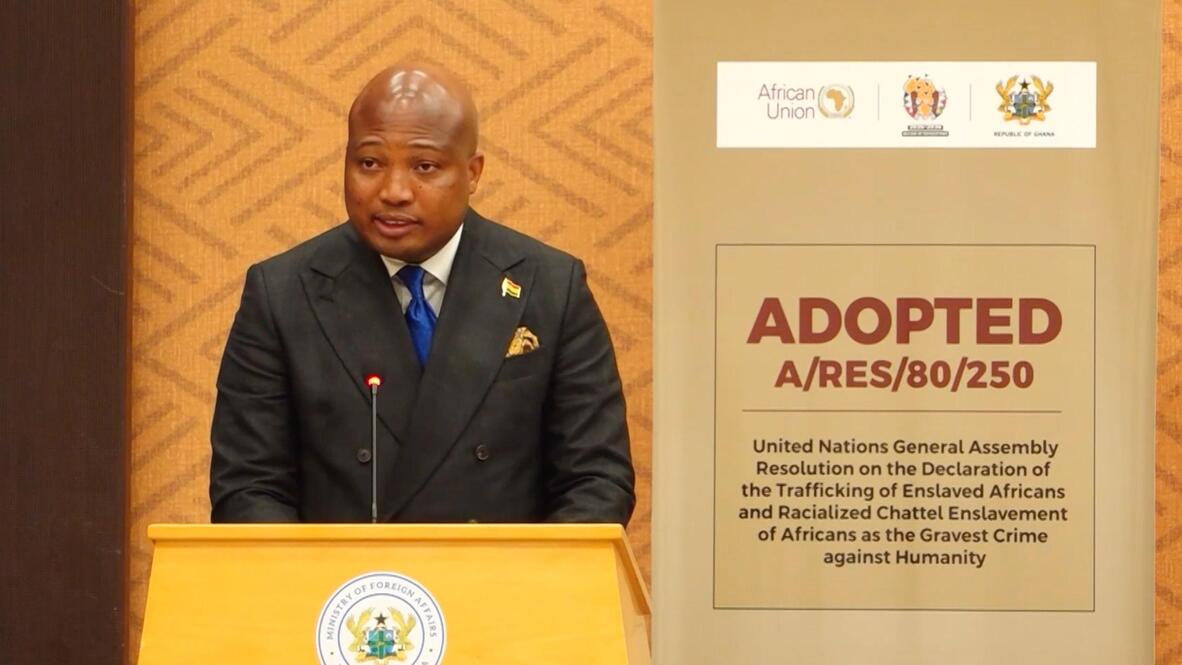
Ghanaian Foreign Minister Samuel Okudzeto Ablakwa on Monday announced that the upcoming Next Steps conference, to be held in Accra from June 17-19, will focus on advancing the implementation of United Nations Resolution A/RES/80/250, which recognises the trafficking and racialised enslavement of Africans as the ‘gravest crime against humanity’.
“This gathering represents a strategic turning point, an opportunity to transform global consensus into coordinated action,” Ablakwa told reporters at a press conference in Accra.
“The objective is clear: to move from recognition to implementation, to move from declaration to frameworks, to move from aspirations to concrete action. This conference will therefore focus not only on what has been achieved, but more importantly, on what comes next,” he added.
Participants from the African Union, CARICOM, North America, and Latin America are expected to strengthen coordination in advancing reparatory justice while also engaging European partners on accountability for the transatlantic slave trade.
Ablakwa also highlighted ongoing cooperation with French President Emmanuel Macron.
“What President Macron has also done is to announce that France is willing to work with Ghana to establish a scientific commission on slavery to ensure that reparatory justice is achieved in our lifetime,” the minister noted, adding that the French government is ready to engage in the return of artefacts taken during the colonial period.
The UN General Assembly adopted the resolution on March 25, formally designating the transatlantic slave trade and the system of racialised enslavement as crimes against humanity, a position long advocated by Ghana and its partners.
According to organisers, the Accra conference will bring together government officials, regional organisations, and international stakeholders to define practical mechanisms for reparatory justice. Discussions are expected to cover institutional frameworks, cross-regional coordination, historical accountability, and pathways for implementation in the post-resolution phase.
Source: Viory