By Francis Kobena Tandoh
The government of Ghana on Tuesday launched the National Urban Policy and Implementation Plan (2026–2035) and the National Slum Upgrading and Prevention Strategy (2026–2035), setting out a 10-year roadmap to promote a sustainable, inclusive, and climate-resilient urban development strategy across the country.
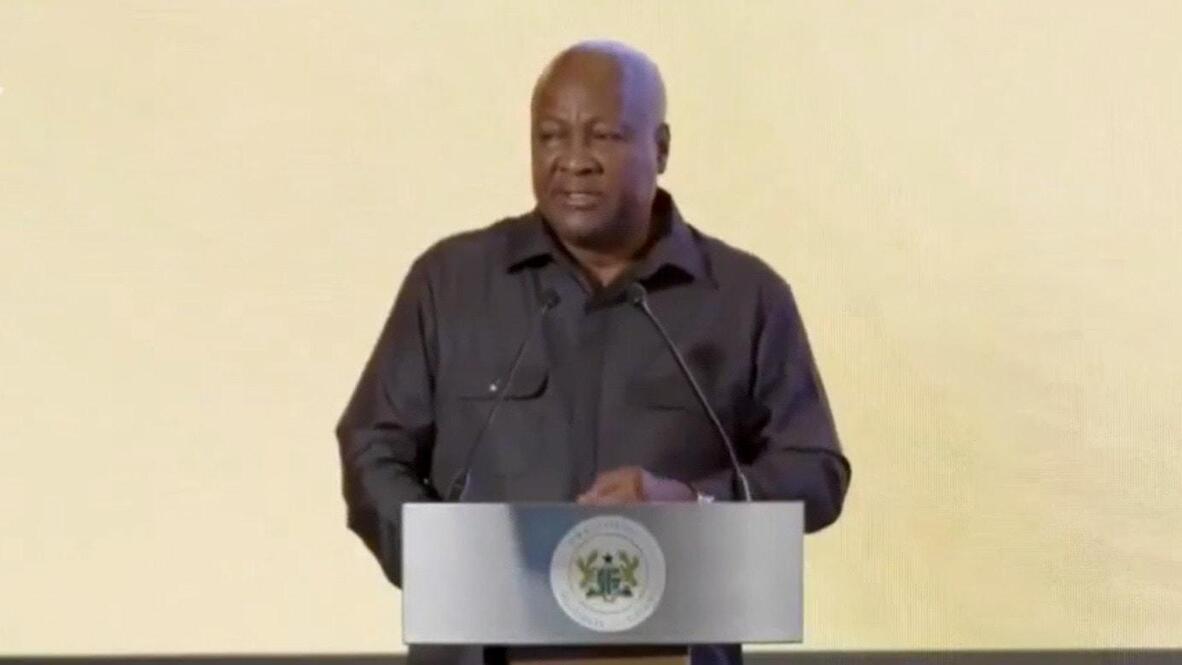
In a speech delivered on behalf of President Mahama by the Chairman of the National Development Planning Commission (NDPC), Dr. Nii Moi Thompson, at the 9th Ghana Urban Forum in the Ghanaian capital, Accra, he described effective urbanization as critical to Ghana’s economic growth, environmental sustainability, and social inclusion.
According to him, Ghana’s urban population has grown significantly over the past four decades, placing increasing pressure on housing, transport, sanitation, drainage systems, and other essential infrastructure.
He said the new policy adopts a comprehensive approach to urban development by integrating affordable housing, land-use planning, climate resilience, environmental sustainability, digital innovation, and sustainable financing.
President Mahama also announced that the government is prioritizing smart city development through digital land administration, geographic information systems, digital permitting, and data-driven governance to improve efficiency, transparency, and service delivery.
He further highlighted ongoing investments under the Big Push Program and the 24-Hour Economy initiative, aimed at expanding road networks, drainage infrastructure, markets, and enterprise development to support economic growth and job creation.
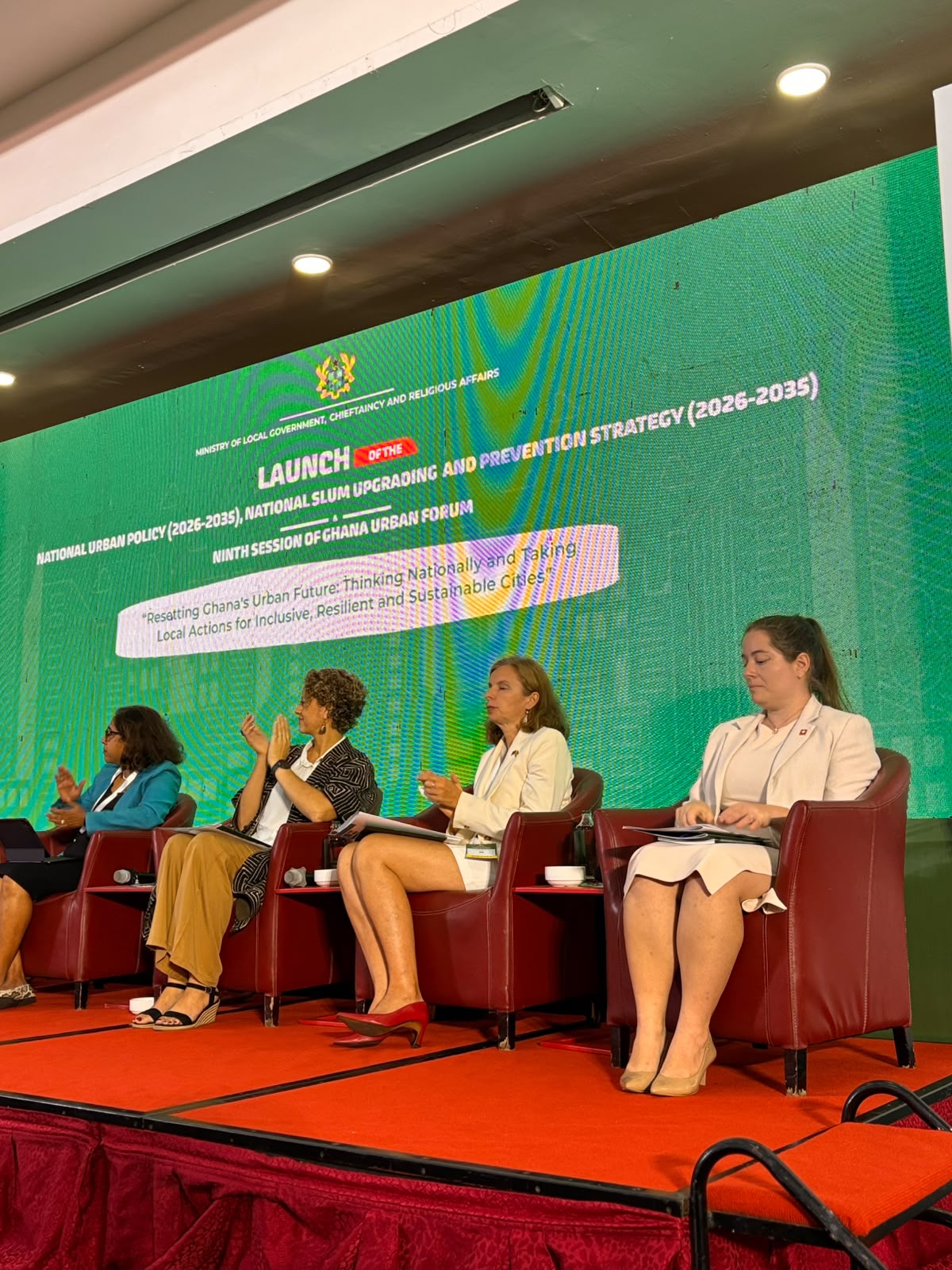
World Bank URL Practice Manager Madhu Raghunath said the National Urban Policy by the government of Ghana has the potential to unlock economic growth and create several job opportunities in major cities across the country.
He observed that Ghana has experienced a remarkable structural transformation over the past three decades, becoming one of the most urbanized countries in Sub-Saharan Africa (SSA) with 57 percent of its population now living in urban areas.
According to him, the urban population of the West African country will more than double by 2050 under the status quo, and accommodating new urban residents would require constructing the equivalent of three new Greater Kumasi Metropolitan Areas.
He urged the need to build strong partnerships with the private sector in order to leverage the potential benefits of urbanization.
“Well-planned cities reduce the cost of doing business, connect firms to workers and markets, and enable people, especially young people and informal workers, to access services, mobility, skills, and better livelihood opportunities. Cities are not only places where people live; they are platforms for firms to grow, workers to access jobs, and communities to prosper,” said Raghunath.
“The National Urban Policy offers the potential to unlock economic growth and job creation in Ghana’s cities, but its success hinges on strong partnerships, particularly with the private sector, to turn these strategic recommendations into impactful actions,” he added.
Notwithstanding the potential benefits of urbanization, the World Bank URL Manager, however, stressed that rapid growth has its attendant challenges, including a huge infrastructure gap, urban floods, increasing housing costs, high solid waste, and traffic congestion.
He suggested the challenges must be addressed to ensure that urbanization continues to deliver benefits for all Ghanaians.
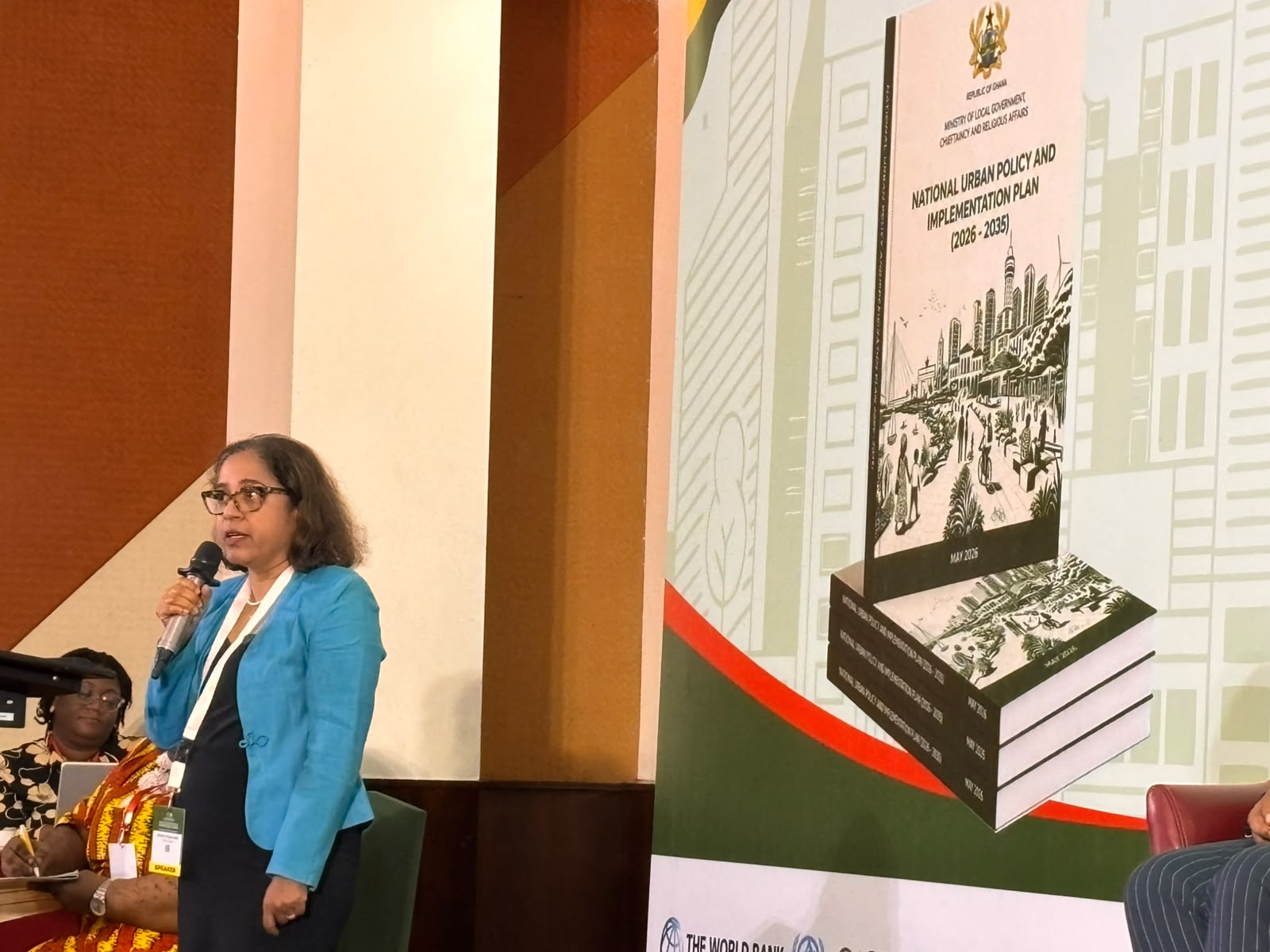
Raghunath urged Ghanaian authorities to pursue integrated packages of investments in physical foundational infrastructure like connectivity, power, waste management, and housing, amongst others, targeted at key locations within cities that can cultivate the emergence or strengthening of jobs-rich clusters; take advantage of the inherent attractiveness of key locations to pursue their integrated area-based urban development through public-private partnerships; and strengthen local institutions and municipal finance.
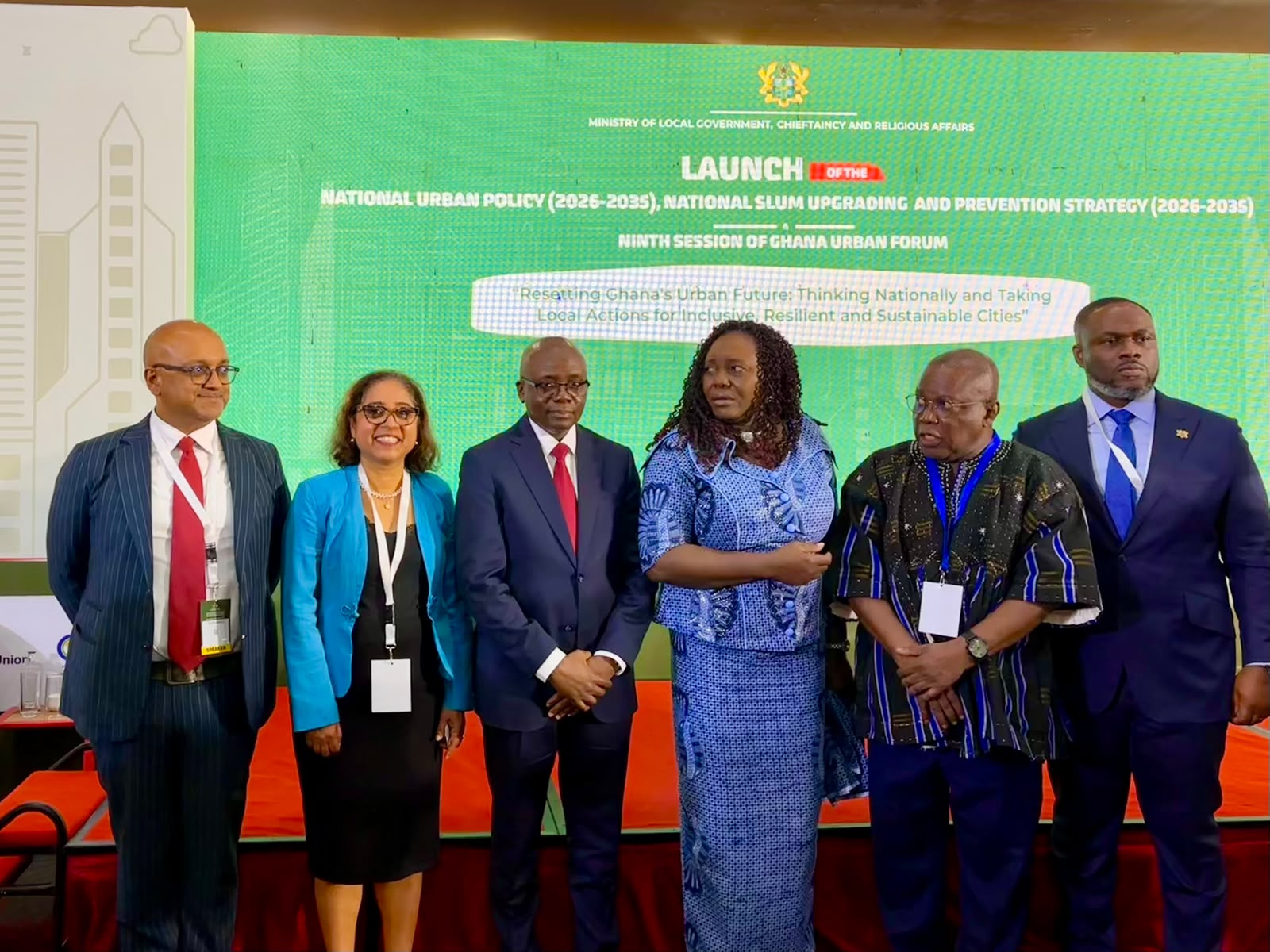
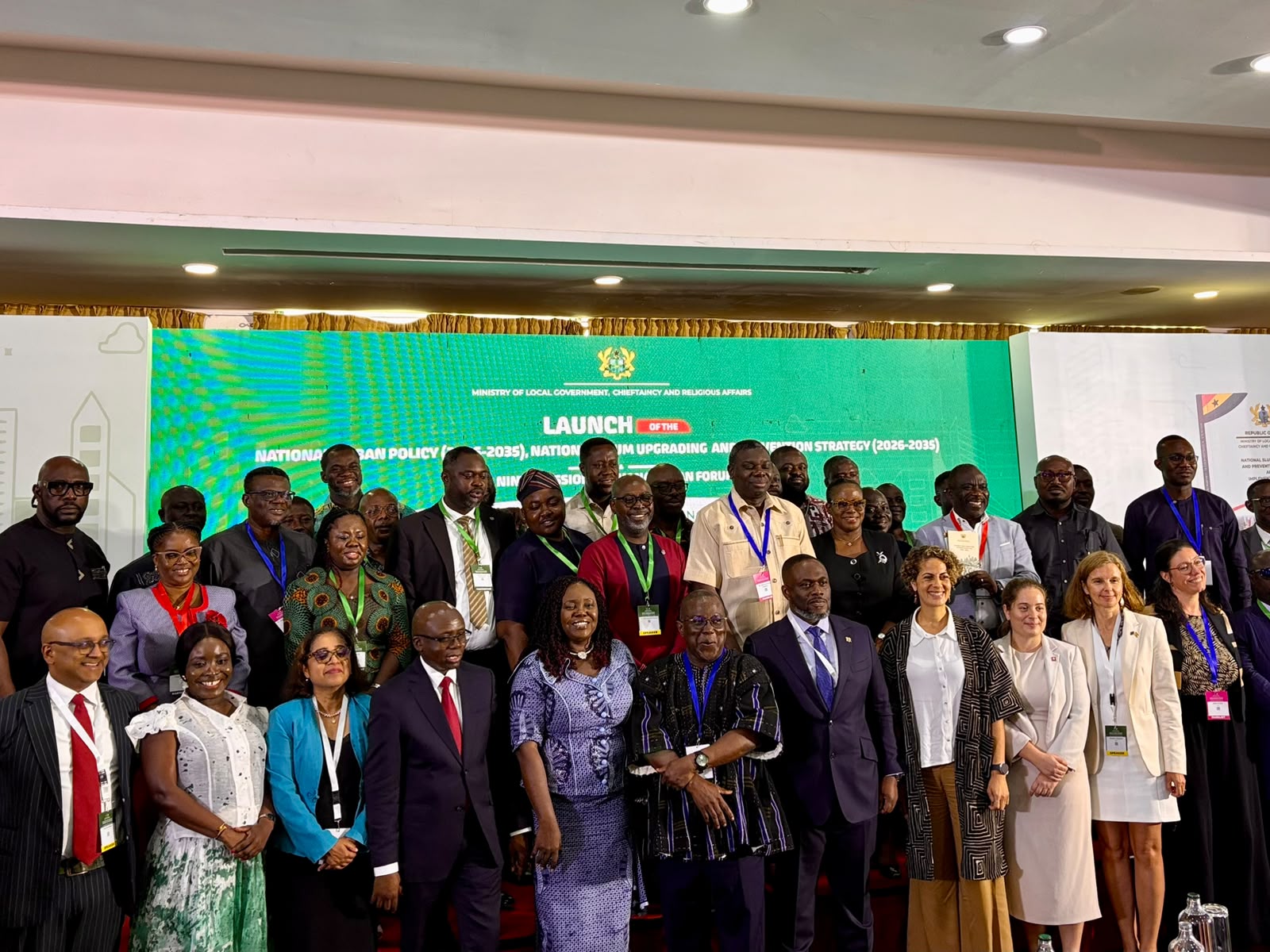
The launch of the National Urban Policy and Implementation Plan and the National Slum Upgrading and Prevention Strategy brought together government officials, Metropolitan, Municipal, and District Chief Executives (MMDCEs), development partners, traditional leaders, urban planners, and civil society organizations.
The combined event reflects a deliberate shift from policy formulation to the commencement of implementation, creating space for dialogue, engagement, and collective action to translate national priorities into practical interventions at the local level. Enditem
Source: Ghana Eye Report