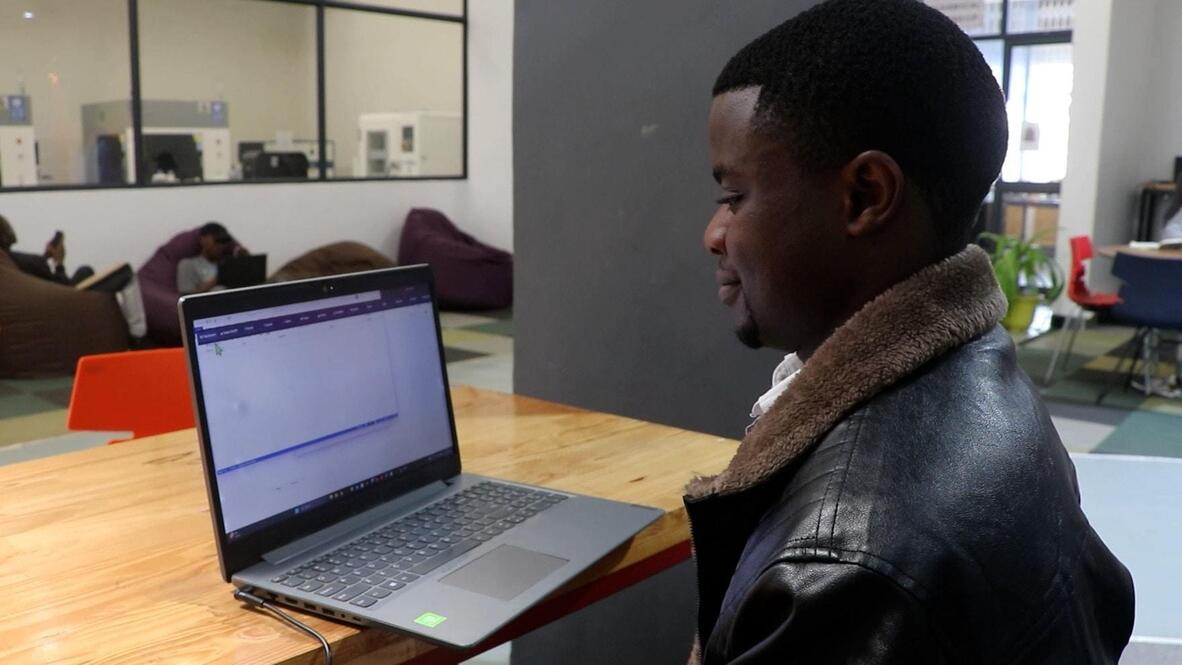
A young Malawian innovator is developing an AI-powered system that allows people with motor disabilities to control computers using only their eyes, offering a potentially cheaper alternative to specialised assistive equipment.
Footage from Blantyre on Tuesday shows Chimwemwe Liwonde demonstrating the technology at the UNiPod innovation facility, moving a computer cursor and navigating pages with his eyes.
“Currently, for a motor-disabled user to use the computer, they rely on caregivers who may perform the task on their behalf. For example, a motor-disabled user may dictate, ‘I want to open this app,’ or ‘I want to type this.’ So actually, I developed this innovation to give them back their independence and access to the digital world,” Liwonde explained.
His system works offline and uses a standard computer camera, removing the need for specialised eye-tracking hardware and potentially making the technology more accessible.
Lyson Mapanga, Communications Officer at the Federation of Disability Organisations in Malawi (FEDOMA), demonstrated how the system could help him work more efficiently.
“If I am to type a four-page document using one hand, it will take me three to four hours for a four-page document to be finalised.”
After testing the eye-control technology, Mapanga said it could help him use his abilities better.
“I do believe that with this software, when I am using it, navigating this software, it will be very helpful. I will be able to maximise my potential in delivering what is recommended for me to do,” Mapanga explained.
The project has already won recognition, with Liwonde receiving the Best Social Impact Award at Malawi’s National ICT Innovation Awards. UNiPod Manager Francis Masi said efforts are now underway to bring more stakeholders on board and take the technology beyond the development stage.
“The idea is that we should see this innovation being used out there,” he said.
Access to assistive technology remains limited in Malawi. Research cited by those involved in the project found that 56.5 percent of people with disabilities needed assistive technology, while only 6.1 percent had received it, showing the scale of the challenge of making these tools affordable and widely available.
Source: Viory