The Ebola outbreak sweeping across the Democratic Republic of the Congo (DRC) has become the deadliest in the country’s history and the second-largest ever recorded globally, with the World Health Organization (WHO) warning that it could eventually surpass the devastating 2014-2016 West Africa epidemic if it continues at its current pace.
The DRC has recorded 4,945 confirmed cases, including 2,325 deaths, since the current outbreak began, according to the latest figures released late Sunday by the country’s health authorities. The case fatality rate stands at 47.0 percent, while 1,040 people have recovered.
According to WHO figures, the 2018-2020 outbreak in eastern DRC recorded 3,481 cases, including 3,323 confirmed cases, with 2,299 deaths and 1,162 survivors. It had previously been the deadliest Ebola outbreak in the country’s history.
The current epidemic has already grown significantly larger in terms of cases.
“It’s already the second-biggest Ebola epidemic on record, and it’s moving faster than any previous Ebola outbreak,” WHO Director-General Tedros Adhanom Ghebreyesus said at a press briefing in Geneva on Aug. 12, warning that “at its current pace, it’s on track to eclipse the West African Ebola outbreak of 2014 to 2016.”
The 2014-2016 West Africa epidemic, the largest Ebola outbreak ever recorded, infected more than 28,600 people and killed over 11,000, mainly in Guinea, Liberia and Sierra Leone.
OUTBREAK STILL ACCELERATING
Cases have now been detected in 55 health zones across six provinces — Ituri, North Kivu, Haut-Uele, Tshopo, South Kivu and Bas-Uele. Ituri remains the epicenter, accounting for 4,194 confirmed cases, or nearly 85 percent of the national total, and 1,838 deaths.
The outbreak, caused by the Bundibugyo ebolavirus, is the DRC’s 17th recorded Ebola epidemic since the virus was first identified in the country in 1976.
The accelerating pace of transmission has increasingly alarmed humanitarian agencies.
“Ebola is winning in the DRC. We cannot let the virus outrun our response,” UN humanitarian chief Tom Fletcher said on Aug. 14 in a statement following an emergency meeting of the Inter-Agency Standing Committee, which brings together the world’s major humanitarian organizations.
Fletcher described the outbreak as the fastest-growing on record and said it was killing someone roughly every 30 minutes.
He announced an additional 30.5 million U.S. dollars from the UN Central Emergency Response Fund, calling for a rapid expansion of treatment capacity, contact tracing and safe and dignified burials.
The UN official added that the response needs to double the number of safe burial teams and triple treatment capacity, while strengthening experienced management and basic services such as water, hygiene and healthcare.
RESPONSE STRUGGLES TO KEEP PACE
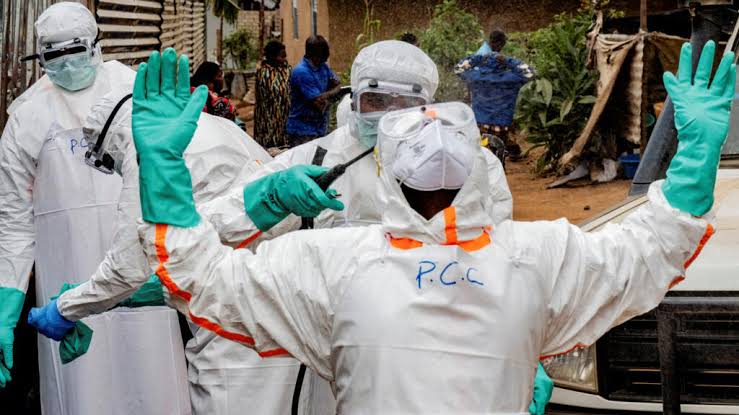
Despite efforts to scale up the response, major gaps remain in attempts to interrupt transmission.
The latest government situation report showed that contact follow-up had reached 85.3 percent nationally, but remained substantially lower in some affected areas. Authorities continued to cite weaknesses in alert reporting and in the listing and follow-up of contacts linked to confirmed cases.
Treatment facilities are also under pressure. Several Ebola treatment and transit centers in Ituri were reported saturated, while beds for suspected cases in North Kivu were fully occupied.
The operational environment adds another layer of difficulty. Many affected areas in eastern DRC have for years been hit by armed conflict, population displacement, weak infrastructure and limited access to healthcare.
Humanitarian agencies have also warned that the expanding Ebola response must not come at the expense of other major health emergencies.
Medecins Sans Frontieres (MSF), an international medical humanitarian organization, said Friday that measles, cholera, malaria and conflict-related health needs continue to affect large numbers of people in North Kivu and South Kivu.
More than 108,000 suspected measles cases and nearly 1,400 deaths had been reported nationwide by July 19, while more than 35,000 suspected cholera cases and over 1,000 deaths had also been recorded, according to figures cited by MSF.
“The Ebola disease outbreak is a major emergency, but it is not the only one,” said Joshua Eckley, MSF head of programs in South Kivu.
For health authorities and international responders, however, the immediate race is increasingly against the trajectory of Ebola itself. Enditem
Source: Xinhua