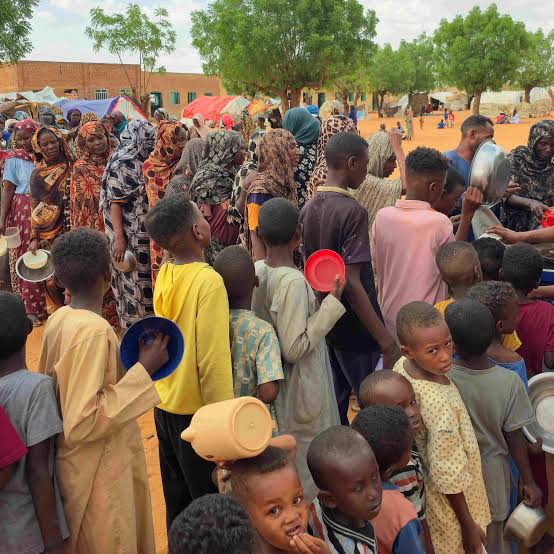
The new arrivals are now part of more than 605,000 people living in El Obeid town and Sheikan locality, who have come seeking safety but are facing new challenges in accessing health, water, education and protection services within the city
Nearly 39,000 children fled to the city of El Obeid in North Kordofan, Sudan, over the first six months of the year, escaping violence and attacks on civilians and civilian infrastructure that have uprooted families across the state, Save the Children said.
The new arrivals are now part of more than 605,000 people living in El Obeid town and Sheikan locality, who have come seeking safety but are facing new challenges in accessing health, water, education and protection services within the city [1].
Save the Children is reporting a significant increase in cases of child malnutrition in Sheikan locality, with nutrition centres seeing substantial increases in new inpatients. In April 2026, Save the Children-supported health facilities in Sheikan locality treated 426 children for malnutrition, compared with 195 in March, marking a 118% month-on-month increase and a 75% rise from April 2025.
In June and July, Save the Children field reports further revealed severe food shortages and reduced food assistance in the two camps where the aid agency supports displaced families. While many families rely entirely on humanitarian aid, it remains far below the growing needs, forcing children to skip meals or go to sleep hungry.
Water shortages in the city are also compounding the crisis, with Save the Children staff reporting some families spend nearly half of their day searching for water. The situation was particularly bad in June and July when drone strikes hit water infrastructure, causing panic and further exacerbating shortages. Where individual consumption has now been reduced to approximately 7 litres per person per day, less than half of the general minimum standard of 15 litres recommended by the World Health Organization during crises.
Mohamed*, a father living with his family in a camp for displaced people in El Obeid, told Save the Children:
“When we arrived in El Obeid, we had nothing except the clothes we were wearing. Finding food, water, and a safe place for our children was our biggest concern. Every day is a struggle, but we are trying to rebuild our lives.”
Amani*, Save the Children staff working in El Obeid said the scale of humanitarian need has grown significantly in recent months:
“Today, we are seeing substantially higher levels of need than we observed three months ago. The number of displaced families has increased, food and fuel prices have risen sharply, access to safe water has become more difficult, and health facilities are reporting higher numbers of children requiring treatment for malnutrition and illness.”
Francesco Lanino, Deputy Country Director for Save the Children in Sudan, said:
“El Obeid is approaching a humanitarian breaking point. Tens of thousands of children have been forced from their homes by violence and attacks that continue to impact civilians and civilian infrastructure across North Kordofan. Families arriving in the city are seeking safety, but many are finding food shortages, limited access to clean water and health services already pushed to their limits.
“Children are paying the highest price for this conflict. They are being displaced, going hungry, losing access to education, and living with constant fear and uncertainty. The international community must act urgently to protect civilians, ensure safe humanitarian access and provide the resources needed before this crisis deepens further.”
Across North Kordofan, attacks on civilian infrastructure – including fuel stations and depots, market areas, health facilities, and residential neighbourhoods – have disrupted access to essential services, destroyed livelihoods and forced growing numbers of families to flee in search of safety, placing further pressure on already overstretched resources in El Obeid.
Save the Children continues to operate in and around El Obeid, providing health, nutrition, water, sanitation, education and child protection services despite growing access challenges.
The aid agency is calling for the protection of civilians, ensuring safe and sustained humanitarian access, and increased humanitarian support to meet the growing needs of displaced children and families in El Obeid and across Sudan. Without urgent action, needs are expected to increase significantly in the coming weeks, placing thousands more at risk.
Save the Children has worked in Sudan since 1983 and provides programming for children and families affected by conflict, displacement, extreme poverty and hunger. Enditem
Source: APO