
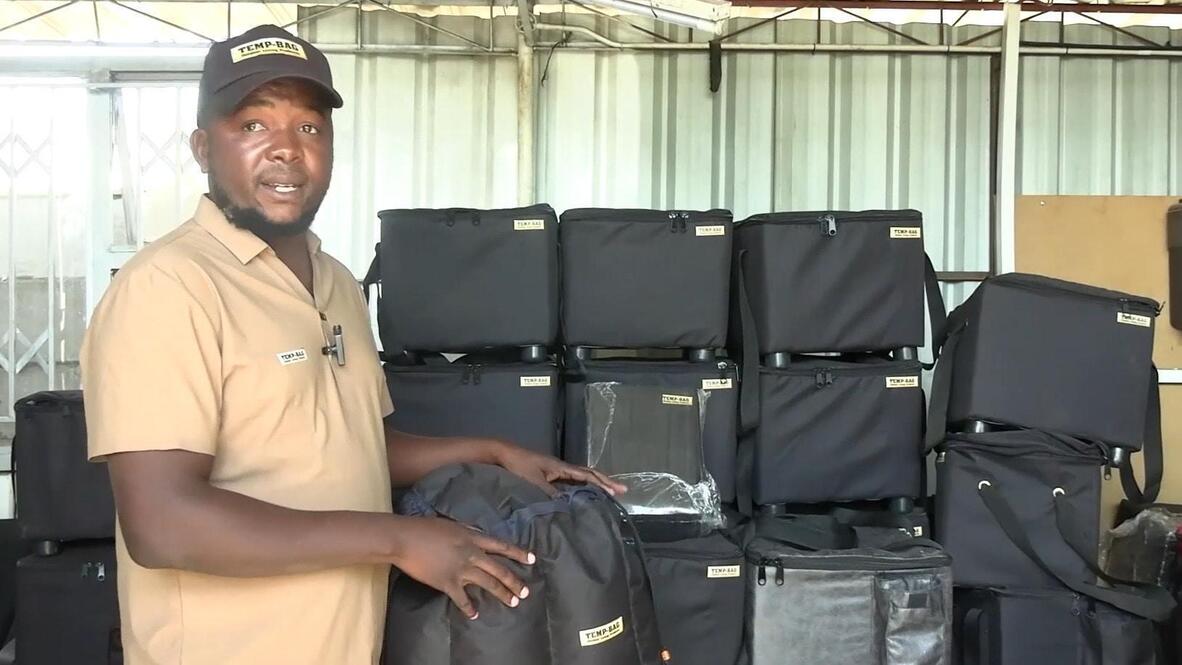
Award-winning innovator from Zimbabwe, Tinashe Manyonga, transforms one of the world’s most persistent forms of waste – polystyrene – into practical goods such as cooler bags and cooking bags, highlighting a local solution that promotes recycling and entrepreneurship.
Footage filmed on Saturday shows workers of Manyonga’s ‘Temp-Bag Outdoor Living Products’ using plastics and extruded polystyrene to manufacture sustainable non-electric thermal bags.
With hundreds of bags produced, each containing recycled material, Manyonga believes his project is proving that waste can become a valuable resource.
“Polystyrene waste is a big problem in the whole world,” the innovator said. “It’s a non-biodegradable material. It takes over 500 years for it to decompose, so when you discard it, it practically stays. You have nothing to do. If you burn it, it’s a big pollutant in the atmosphere. It even produces a toxic gas called styrene.”
Innovators like Manyonga are demonstrating how this waste – which would otherwise lie idle in the environment – can be transformed into valuable products.
“We are diverting waste that is supposed to lie idle in the environment. We are making something that is functional and useful,” Manyonga explained.
“We use corrugated cardboard, and polystyrene serves as filling in big bags like the one that I am sitting on and as insulation in the timber coolers that you see around me here,” Manyonga commented, noting that 400 grammes of polystyrene was used for the best-selling bag.
Zimbabwe banned polystyrene nearly a decade ago because of its severe environmental impact and to reduce major health risks. However, thousands of tonnes of polystyrene still make their way into the country through tobacco seedling production as well as product packaging.
“In Zimbabwe alone we produce probably over 140 tonnes of polystyrene, neopolystyrene, every year, and maybe it’s used for two, three or four seasons, but eventually it breaks down, and when it breaks down, it’s unusable,” Manyonga said.
As over 300 million tonnes of plastic are produced every single day, polystyrene remains one of the world’s most widespread pollutants. It breaks apart and floats easily, making it the most common plastic pollutant in the world’s oceans and heavily contributing to microplastic contamination.
Source: Viory

hhymo7