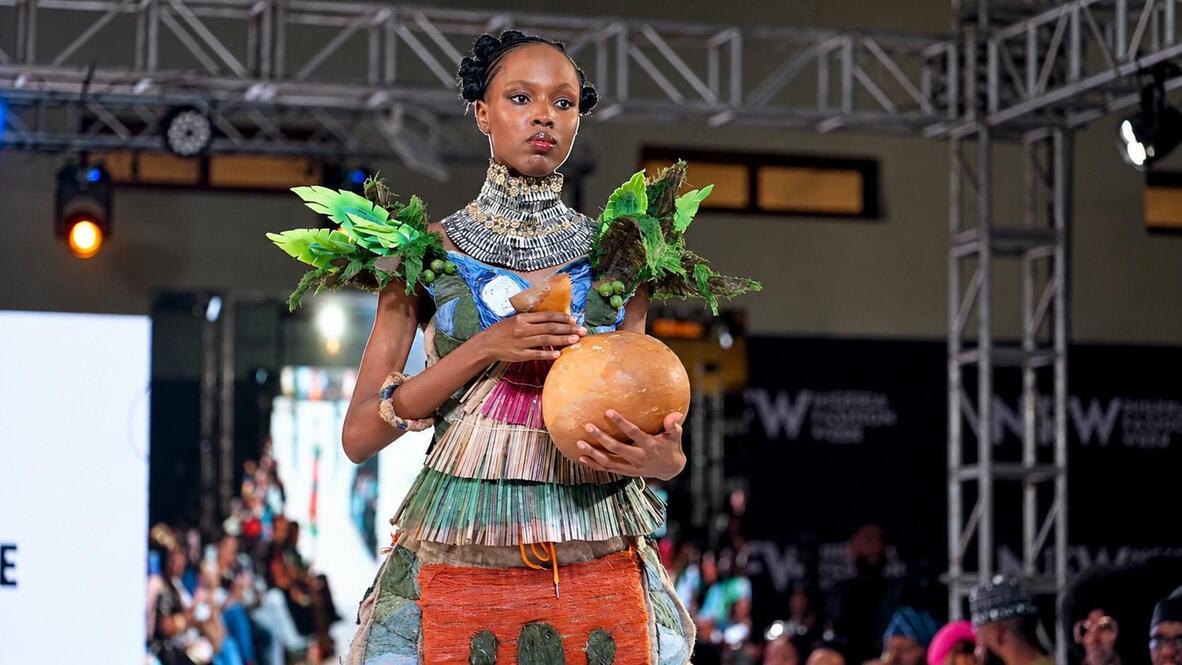
The fashion industry brought oversized silhouettes, bold colour and recycled materials to Abuja on Sunday as Nigeria Fashion Week wrapped up its first edition in the capital.
Footage shows models striding down the runway in brightly coloured, sculpted designs as crowds watch from either side of the catwalk.
The event brought together emerging and established designers from Nigeria and abroad, with a dedicated ‘Going Green’ collection focused on recycling, upcycling, responsible sourcing and turning discarded materials into fashion.
“Nigerian Fashion Week is actually a great platform for young designers to showcase their talent and their skill,” Del Africa Fashion House CEO Fidelis Usigbe said.
“I really want the world to understand that if you’re creative, stick to your creative ability, be persistent and stay focused on your dream, it can take you places, if you keep pushing,” he added.
This year’s theme, “Beyond the Runway: Fashion and Culture at the Heart of the Green-Blue Economy”, put sustainability and business alongside the spectacle, with organisers pitching fashion as a source of jobs, investment and economic growth.
“One thing that fascinates me about this fashion week is the promotion of green economy – they are also promoting the green economy and every other thing around climate change and all that,” attendee Chioma Osuji said.
The 2026 edition also marked a break with more than two decades in Lagos. Nigeria Fashion Week, held there since 2002, moved to Abuja this year as organisers sought closer links between the fashion industry and government and a bigger creative profile for the capital.
“The next phase for fashion is Africa. Even with the Western colonisation, you can still see that African culture is still thriving,” designer Victory Didem said. “African fashion and everything is going to another level.”
More than 40 Nigerian and international designers were scheduled to take part, according to organiser Lexy Mojo-Eyes, who said the event was intended to help turn creativity into viable businesses and open new markets for African designers.
Source: Viory