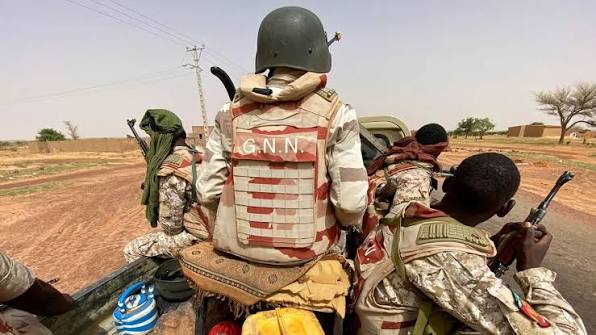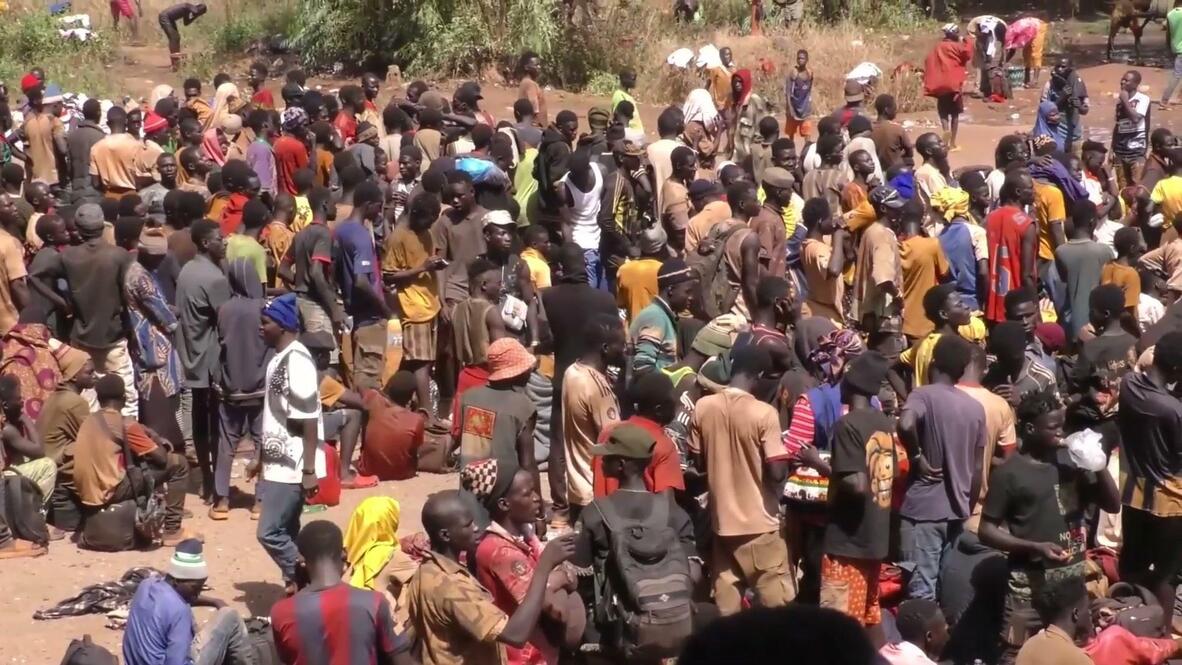
Thousands of Burkinabe gold miners expelled from Guinea have returned to Burkina Faso, with some recounting violence, missing relatives and uncertainty over their livelihoods after being forced to leave artisanal mining sites.
Footage filmed in Bobo-Dioulasso on Friday shows miners travelling in the back of trucks, buses carrying returnees and groups of workers gathering, while others queue for food.
“We witnessed the deaths of some of our loved ones. Some went missing; others were arrested and then released,” recalled Burkinabe gold miner Aboubacar Barry, describing the difficulties faced during the expulsions.
Togolese miner Parfait Myangba, who had also been working in Guinea, accused the authorities of mistreating those forced to leave the country.
“When we were deported, we were beaten; we ended up in the forest; others were injured, but we held on until we reached Mali,” he recounted.
The expulsions followed a crackdown by Guinean authorities on unauthorised artisanal gold mining, which the government said was causing environmental damage, including the destruction of farmland and pollution of rivers.
According to Burkina Faso’s National Council for Emergency Relief and Rehabilitation (CONASUR), 45,406 people had been received and registered by November 12, including children and nationals of other countries. The first organised convoy of around 3,400 Burkinabe nationals arrived in Bobo-Dioulasso on November 6 after travelling through Mali.
For many returning miners, the loss of personal documents and the absence of alternative employment have raised concerns about their future.
“We no longer have any documents. If the authorities could help us obtain our papers, we would commit to looking for work, but it would no longer be in artisanal gold panning,” Barry explained.
Burkinabe authorities announced plans to support the returnees through vocational training, education and reintegration programmes, while arranging transport from Bobo-Dioulasso to their home communities.
Source: Viory