An aerial drone photo taken on Oct. 1, 2026 shows the Land Fingerprint Concert held in Dafang County of southwest China’s Guizhou Province. (Xinhua/Yang Wenbin)
Poverty eradication is “a common ideal of humanity,” Chinese President Xi Jinping has once said.
Five years after China declared a complete victory in the fight against absolute poverty in 2021, its approach continues to inspire poverty reduction efforts worldwide.
Xi’s dedication to poverty alleviation spans decades, from his early work in poor rural communities to the nationwide campaign he led and his efforts to promote international cooperation — a long-running endeavor that resonates as the world marks the International Day for the Eradication of Poverty on Saturday.
A DECADES-LONG PURSUIT
“A weak hatchling bird can be the first to fly, and the poorest can be the first to become rich,” Xi wrote in a 1988 essay on the development of Ningde Prefecture in east China’s Fujian Province.
The following summer, Xi, then Ningde’s Party secretary, traveled by car and on foot to reach Xiadang, a remote mountain township that had no road access.
Xi returned to Xiadang twice, helping tackle problems with roads, electricity and water supplies. In 2019, residents wrote to tell him that their township had shaken off poverty, and he replied with congratulations.
After becoming China’s top leader, Xi continued his hands-on approach to poverty reduction. He conducted more than 50 inspections and research visits related to poverty alleviation, traveling to all 14 of the country’s contiguous areas of extreme poverty.
In February 2018, Xi visited impoverished Yi families in Zhaojue County, Sichuan Province, asking about their livelihoods and discussing ways to tackle poverty with villagers and local officials.
“Not a single ethnic group or family should be left behind in building a moderately prosperous society in all respects,” he said during the visit.
On Feb. 25, 2021, Xi declared a “complete victory” in China’s fight against absolute poverty. Over eight years, nearly 100 million rural residents had been lifted out of absolute poverty, enabling the country to meet the poverty reduction target of the UN 2030 Agenda for Sustainable Development a decade ahead of schedule.
In a congratulatory letter to Xi, UN Secretary-General Antonio Guterres called the achievement “a reason for hope and inspiration to the entire community of nations.”
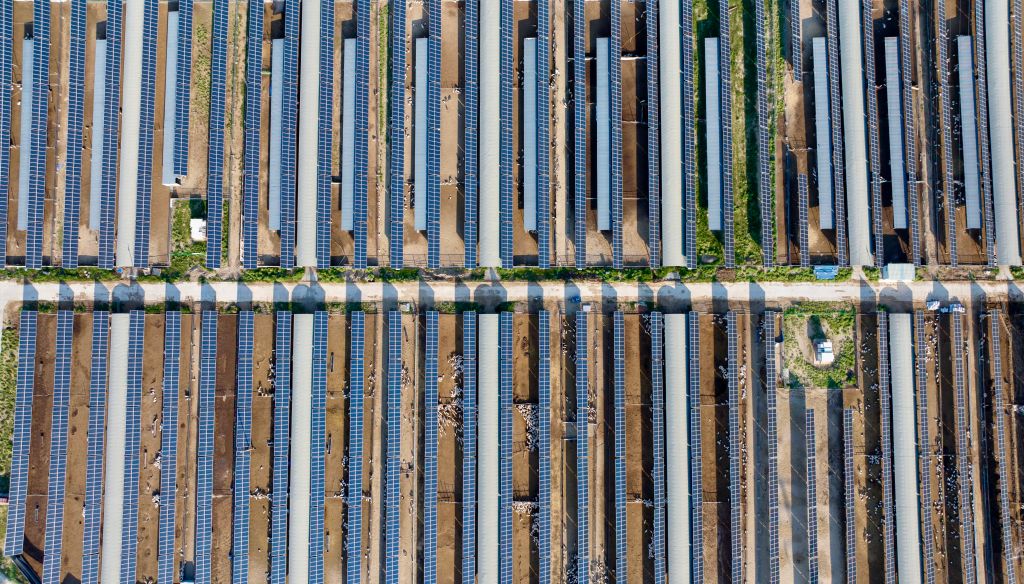
An aerial drone photo taken on Sept. 11, 2026 shows a livestock-photovoltaic integration project in Yuanyi Village, Minning Town, Yongning County of Yinchuan, northwest China’s Ningxia Hui Autonomous Region. (Xinhua/Yang Zhisen)
LESSONS BEYOND BORDERS
China’s poverty reduction experience has attracted attention from leaders around the world, some of whom have sought inspiration from Xi’s writings and visited places where his ideas were put into practice.
Xi’s early ideas on poverty reduction and economic development were collected in “Up and Out of Poverty,” a collection of speeches, articles and interviews from 1988 to 1990 during his tenure in Ningde. Explaining the title, Xi wrote that its significance lay first and foremost in uprooting the “poverty mentality” and “poverty thinking.”
In a foreword to the book’s Uzbek edition published in 2023, President of Uzbekistan Shavkat Mirziyoyev said the work remained an important source of guidance for state and social governance more than three decades after its initial publication.
During his visit to China this month, President of Botswana Duma Gideon Boko traveled to Fuzhou and Ningde in Fujian Province, where Xi once worked, and visited an exhibition on poverty reduction. During talks with Xi in Beijing, Boko depicted China’s development as “an economic and political miracle never seen in history.”
In June 2018, Bounnhang Vorachith, then President of Laos, visited Shibadong Village in central China’s Hunan Province to learn about China’s approach to poverty reduction. In villager Shi Basan’s home, he paused before a photograph showing Xi chatting with her beside a fire pit.
During that November 2013 visit, Xi first proposed “targeted poverty alleviation” in a discussion with villagers, calling for measures tailored to local conditions and each household’s needs.
After retracing Xi’s route and speaking with residents, Bounnhang voiced hope of bringing the village’s experience back to Laos. In reply to a letter from the villagers the following year, he praised Shibadong’s success as offering invaluable lessons for his country.
In September 2026, Prime Minister of Madagascar Mamitiana Rajaonarison also visited Shibadong, where he witnessed first-hand residents’ changing lives and watched demonstrations of traditional Miao ethnic embroidery. He said the visit shown him Xi’s deep concern for the people and provided inspiration for Madagascar.
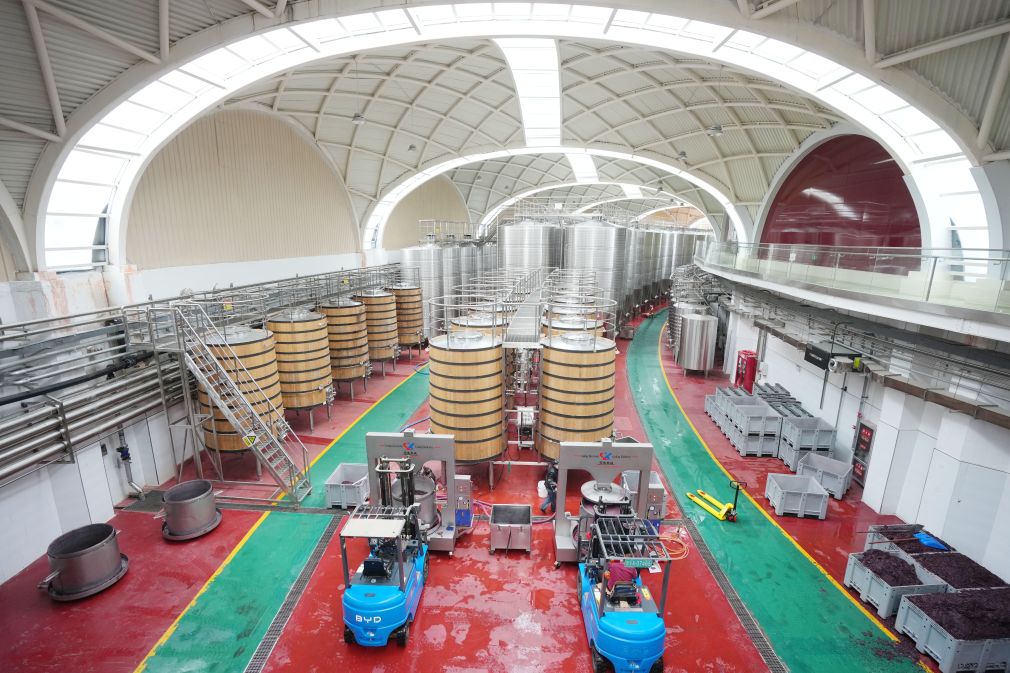
Staff work at a winery of Minning Town, Yongning County in Yinchuan, northwest China’s Ningxia Hui Autonomous Region, Oct. 14, 2025. (Xinhua/Wang Peng)
TURNING EXPERIENCE INTO ACTION
Xi’s efforts to share China’s poverty reduction experience abroad date back to his early tenure in Fujian Province.
There, he promoted Juncao technology as part of Fujian’s poverty reduction cooperation with northwest China’s Ningxia Hui Autonomous Region. In 2000, he introduced the technology to a visiting governor from Papua New Guinea and later helped establish a China-aided Juncao demonstration base in the Pacific island country.
Juncao technology uses grass to cultivate mushrooms and provide livestock feed. The technology has spread to more than 100 countries, creating hundreds of thousands of jobs.
In Zimbabwe, farmer Mandiudza Masvongo has earned 330 U.S. dollars from selling mushrooms since taking up Juncao cultivation in June 2025. The proceeds have helped her start a small cleaning products business, which she said could mark a turning point in her life.
Beyond agriculture, China’s development assistance has also improved basic services and created opportunities for small businesses. In Cambodia’s Tanorn village, a China-aided project brought better roads, clean water and solar power. Por Sokhim, once dependent on rice farming, now runs a grocery store, while her husband operates a motorcycle repair shop.
In 2021, Xi proposed the Global Development Initiative, with poverty reduction and food security among its priorities. In the five years since its launch, cooperation projects under the initiative have taken root and delivered tangible results in more than 120 countries.
At the 2024 G20 summit in Rio de Janeiro, Xi drew upon China’s experience to express confidence in the prospects for poverty reduction across the developing world.
“If China can make it, other developing countries can make it too. This is what China’s battle against poverty says to the world,” he told world leaders. Enditem
Source: Xinhua