By Francis Kobena Tandoh
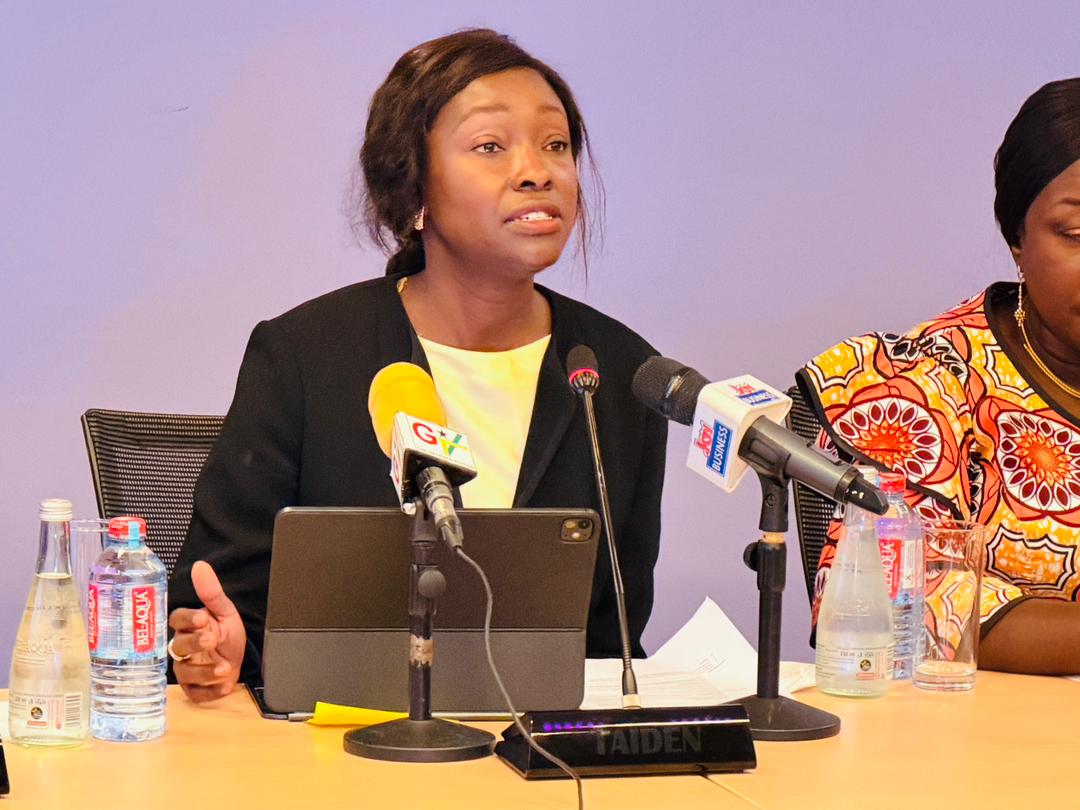
Seynabou Sakho, the World Bank’s Regional Director or Prosperity for Western and Central Africa, late Thursday urged countries in the region to act strategically to provide jobs, growth, and structural transformation in the midst of global uncertainty.
Speaking at a seminar in the Ghanaian capital on the theme “Rethinking trade for growth and jobs in Ghana,” she said recent analysis shows that intra-African trade remains low in volume but far more diversified and manufacturing-intensive than Africa’s exports to the rest of the world, hence making a case for job creation and industrial development.
According to her, recent global uncertainty and volatility present both risks and opportunities, and urged African countries to leverage the prospects to turn their economies around.
“This discussion is taking place at a time of global uncertainty and volatility, with shifting trade systems, fragmented supply chains, and growing unpredictability in global markets. While this creates risks, it also creates opportunities—if countries are prepared to act strategically,” said the World Bank Regional Director.
She urged countries within the region to put in place programs and policies to expand trade in order to boost job creation.
“For Ghana and the broader region, trade expansion remains one of the most powerful tools for job creation, productivity growth, and structural transformation,” added Seynabou.
The Regional Director further stressed that Ghana also has a unique role to play globally and within Africa through the Africa Continental Free Trade Area (AfCFTA), as there is significant opportunity to build regional value chains and expand into sectors such as agribusiness, manufacturing, and digital services.
Seynabou commended the government’s 24-hour economy agenda as highly relevant, as a more dynamic, productive, and export-oriented private sector will be essential in generating the jobs and investment.
Senior Economist with the World Bank, Rami Galal, said trade has a lot of potential but stressed Ghana has not reaped its full benefits.
He explained the causes for the underperformance include cross-cutting constraints in trade policy and facilitation alongside an undiversified production base.
To unlock its potential, Galal urged Ghana to “adopt an export-driven trade strategy, develop a more diversified production base, and relax sector-specific constraints.” Enditem
Source: Ghana Eye Report