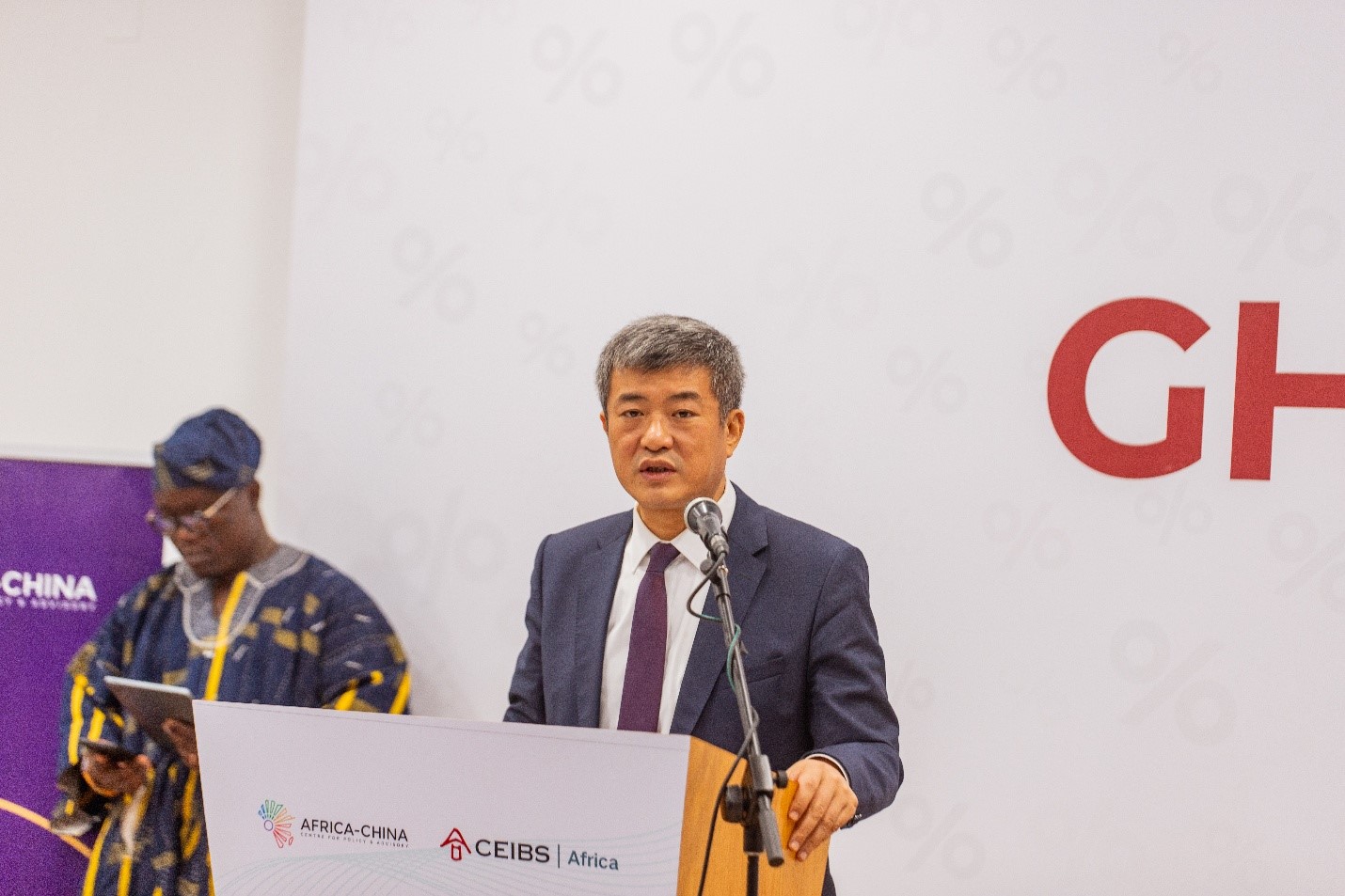
China’s zero-tariff policy could support manufacturing and local processing in Ghana by improving the commercial case for producing value-added goods for the Chinese market, Chinese Ambassador to Ghana, H.E. Cong Song, has said.
Ambassador Cong made the remarks during his keynote address at the High-Level Ghana–China Zero-Tariff Forum 2026, held on Thursday, 15 October, at the AfCFTA Secretariat in Accra.
Co-hosted by the Africa-China Centre for Policy and Advisory (ACCPA) and CEIBS Africa, with support from Prudential Bank Ghana Limited, the Forum attracted about 200 participants from government, businesses, financial institutions, diplomatic missions, development partner organisations, academia, trade-support agencies and the media.
Speaking on the theme, “From Market Access to Market Success,” Ambassador Cong explained that the policy could stimulate investment in Africa’s productive sectors by making locally processed goods more competitive in China.
“It will facilitate the local processing of Africa’s specialty products before they are exported to China, increasing value-addition and benefiting numerous farmers and small businesses,” he said.
According to the Ambassador, improved access to the Chinese market could attract capital, technology, equipment and managerial expertise from China and other trading partners. It could also support the establishment of factories and the development of stronger industrial value chains across Africa.
For Ghana, the policy could create opportunities to expand the local processing of cocoa, cashew, shea and other agricultural products. Textiles, handicrafts and other locally manufactured goods could also benefit from improved access to the Chinese market.
Ambassador Cong noted that Ghanaian cocoa previously faced tariffs ranging from eight to 22 per cent when entering China. Removing these tariffs could lower market-entry costs and strengthen the competitiveness of Ghanaian products.
He nevertheless acknowledged that translating the policy into tangible results would require concrete action. Ghana must identify priority products, address institutional bottlenecks and align its domestic production capacity with Chinese standards and market requirements.
Discussions at the Forum also highlighted the need for adequate export finance, certification support, reliable logistics, modern packaging and stronger connections with credible Chinese buyers.
The Forum emphasised that zero-tariff access should not merely increase Ghana’s exports of raw commodities. It should serve as a platform for expanding domestic processing, creating jobs and strengthening the country’s industrial capacity.
Realising this potential will depend on Ghana’s ability to mobilise investment and build competitive enterprises capable of supplying the Chinese market consistently. Enditem