By Francis Kobena Tandoh
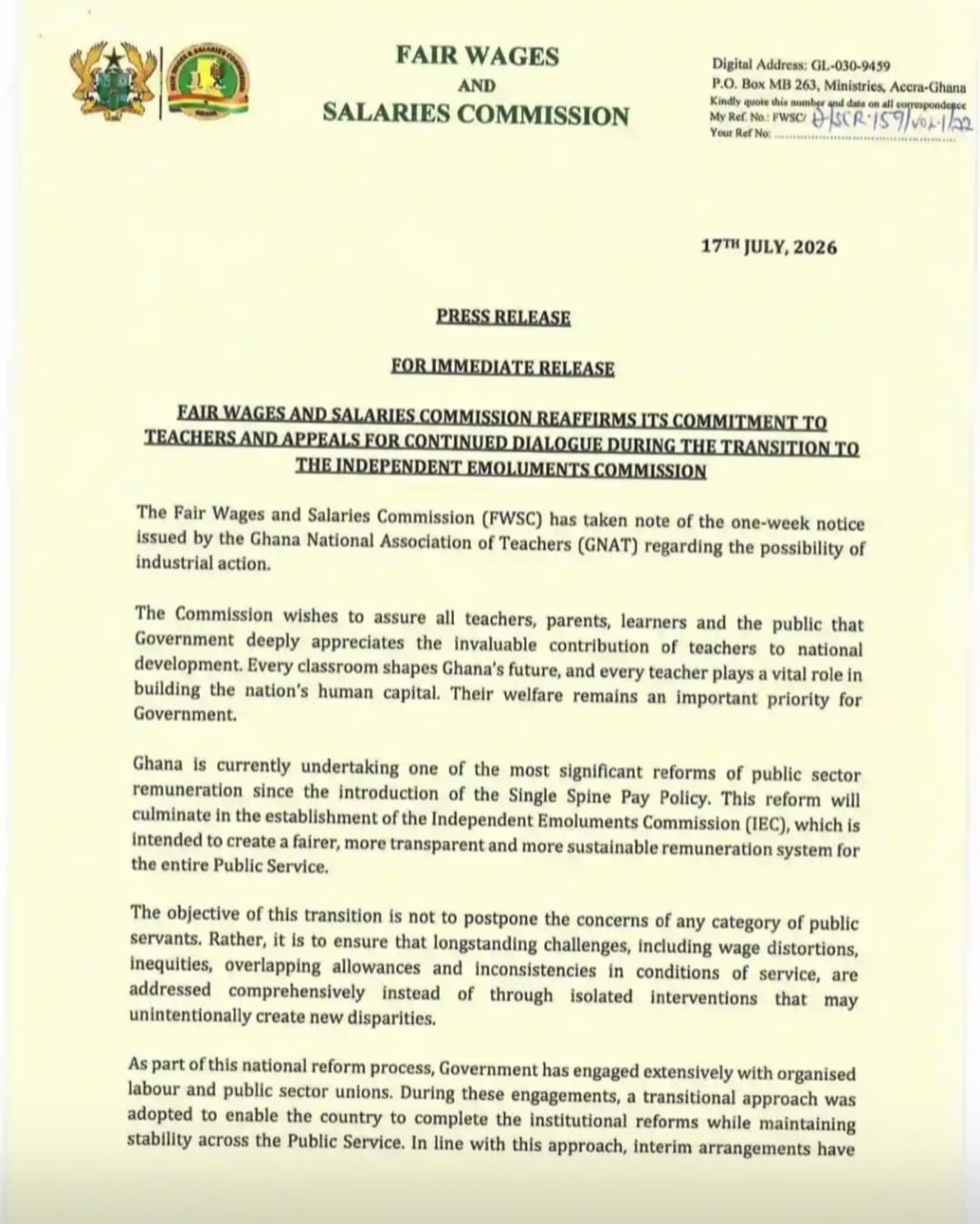
The government of Ghana will soon set up an Independent Emoluments Commission (IEC) to improve public sector pay; this is according to the country’s Fair Wages and Salaries Commission (FWSC) over the weekend.
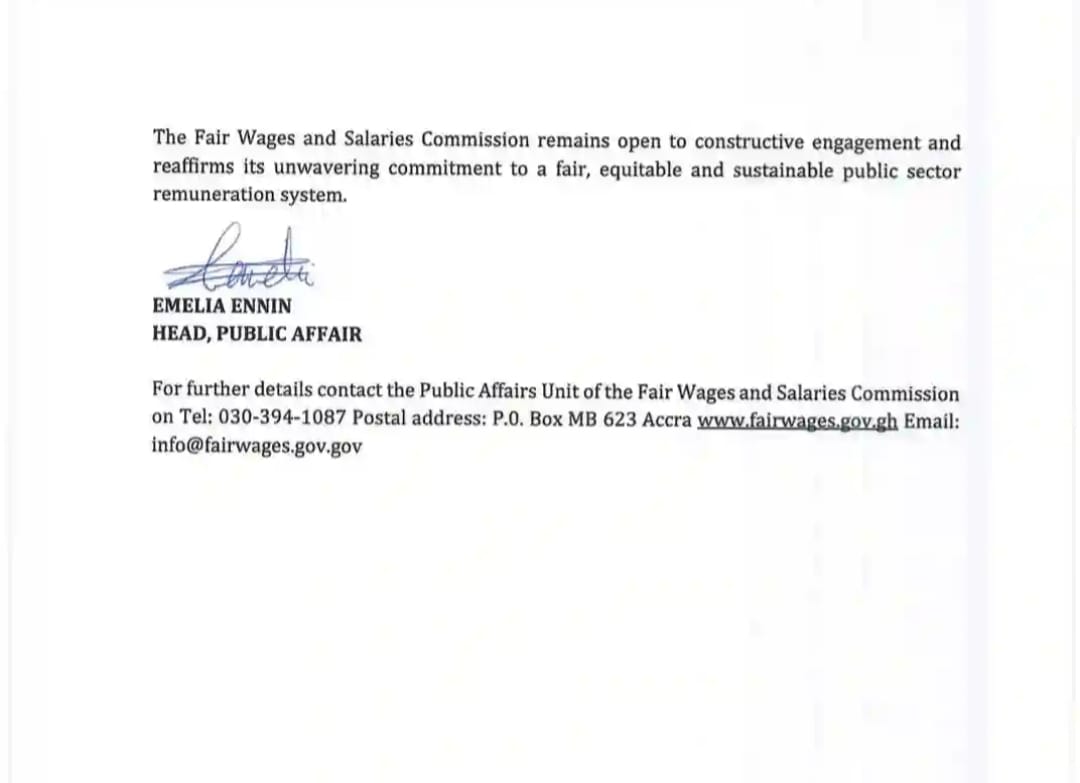
The statement, signed by Emelia Eshun, head of public affairs for the FWSC, said the government is currently pursuing public sector reforms since the introduction of the single spine pay policy (SSPP) introduced about 16 years ago.
This follows a one-week notice issued by teacher unions to embark on an industrial action if their expired conditions of service and others were not addressed by the government.
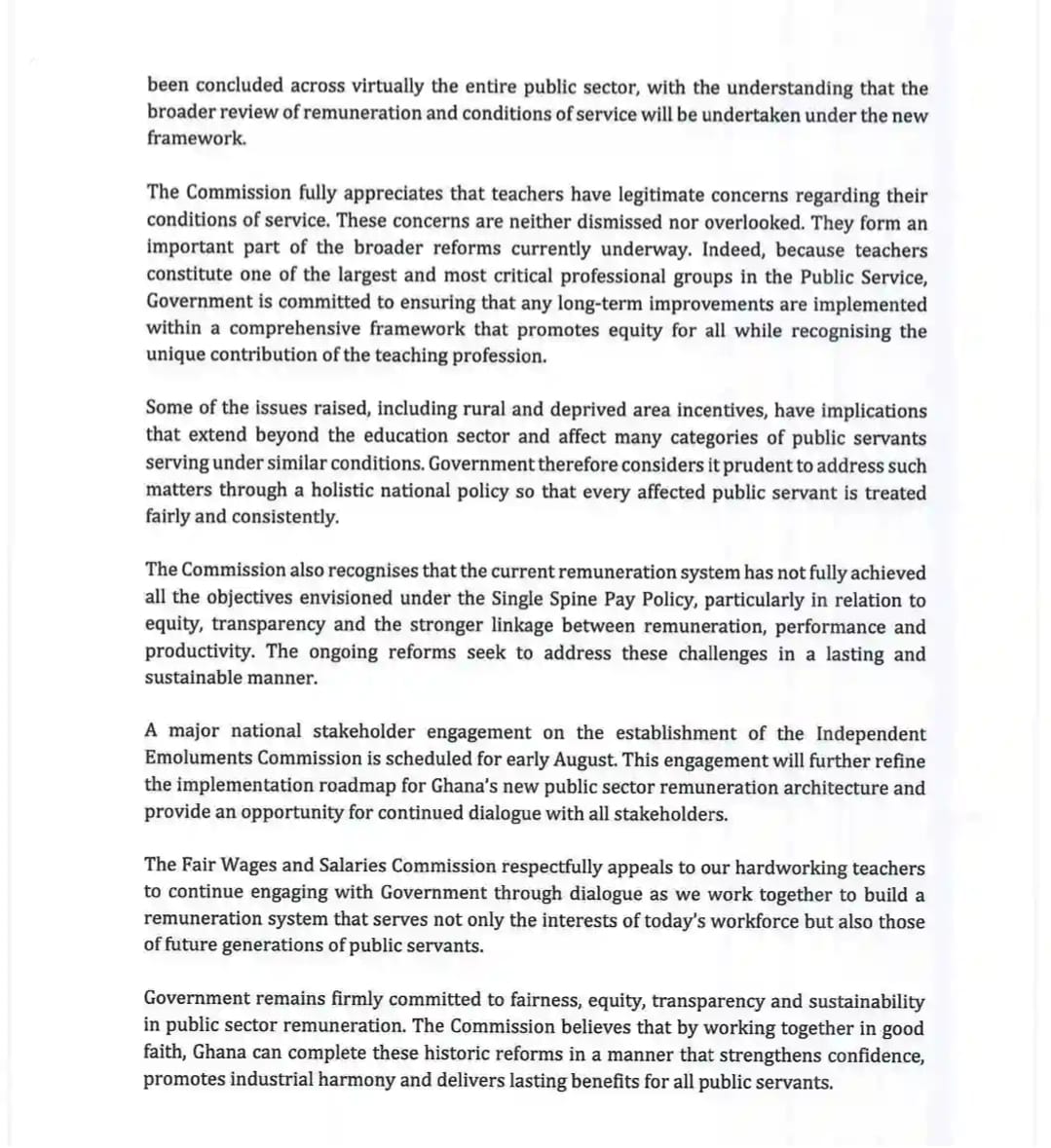
According to the FWSC, the objective of the transition from the SSPP is geared towards ensuring that longstanding challenges, including wage distortions, inequalities, overlapping allowances, and inconsistencies in conditions of service, are addressed comprehensively instead of through isolated interventions that may unintentionally create new disparities.
“Ghana is currently undertaking one of the most significant reforms of public sector remuneration since the introduction of the SSPP. This reform will culminate in the establishment of the IEC, which is intended to create a fairer, more transparent, and more sustainable remuneration system for the entire public service,” said the statement.
As part of the national reform, the government has engaged with organized labor and public sector unions, in which a transitional approach has been adopted to enable authorities to complete the institutional reforms while maintaining stability across the public service.
In line with the objective of achieving the objective of the reforms, the statement further noted that interim arrangements have been concluded across virtually the entire public sector with the understanding that the broader view of remuneration and conditions of service will be undertaken under the new framework.
In 2010, the Ghanaian government introduced the SSPP as a unified system to regulate pay across the entire public sector spectrum.
Its primary goal was to ensure that workers doing similar jobs with the same qualifications were paid equally, removing unfair gaps and confusion in public sector salaries.
However, after 16 years of implementation, many employees in the public sector, including teachers, have raised concerns over disparities in public pay among workers in different fields with similar qualifications. Enditem
Source: Ghana Eye Report
Find the statement from the Fair Wages and Salaries Commission (FWSC) below;